The rapid evolution of payment technology over the past few years has fundamentally changed how customers and businesses handle transactions. More consumers expect seamless, fast, and safe payment methods, especially in retail, hospitality, and food service. For small businesses, adapting to these expectations is critical for remaining competitive and fostering loyalty. Introducing contactless payments not only delivers convenience but can also elevate your overall service reputation.
If you’re considering a move to contactless systems and want to get it right from the start, learning how to accept contactless payments can make a huge difference. Industry leader JIM provides a step-by-step guide for small businesses, drawing on years of experience in local and regional payment solutions.
Their authority comes from real-world experience in payment processing and guidance on POS upgrades, customer communication, and compliance—all crucial areas for anyone ready to introduce or upgrade to contactless payment systems.
With detailed resources in their primary service areas, JIM is committed to helping businesses of all sizes confidently implement modern payment technology.
Table of Contents
Key Takeaways
- Contactless payments offer speed, convenience, and enhanced security for customers and businesses.
- Adopting contactless payment systems is vital for competitiveness and customer satisfaction.
- Small businesses can implement contactless payments by evaluating their POS systems, choosing suitable processors, and training staff.
- Resources from industry experts like JIM can help simplify the transition to contactless payments.
Understanding Contactless Payments
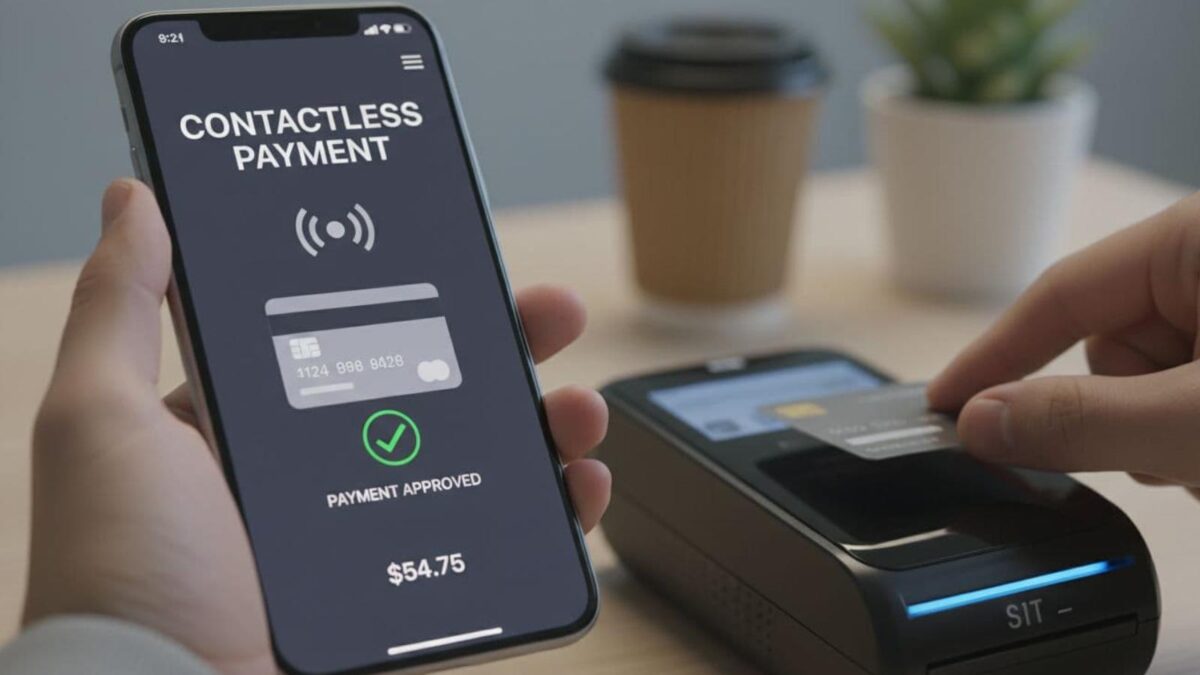
Contactless payments allow swift, secure transactions by enabling customers to tap their credit or debit cards, smartphones, or smartwatches on a POS terminal equipped with Near Field Communication (NFC) technology.
NFC uses encrypted wireless signals to exchange data, enabling nearly instantaneous communication without physical contact. Customers appreciate the ease—transactions that used to take significant seconds now take less than a moment, while merchants benefit from reduced handling of cash or cards.
Security is a hallmark of contactless payments. Modern contactless cards use EMV chip technology paired with tokenization, both of which protect sensitive customer data during transactions.
These technologies have proven highly effective in combating fraud, giving both businesses and consumers greater peace of mind when exchanging payment information.

Benefits of Adopting Contactless Payments
Enhanced Customer Experience
One of the most immediate benefits is faster checkout. Customers can pay within seconds, reducing long lines and wait times. This efficient flow creates a welcoming shopping atmosphere, strengthens customer satisfaction, and can encourage repeat business.
Improved Security for All Parties
With EMV chip and tokenization embedded into contactless technology, small businesses can offer a payment experience that meets the highest standards in fraud prevention and transaction protection.
Unlike traditional magnetic swipe methods, these technologies shield cardholder information from interception or duplication.
Operational Efficiency and Cleanliness
Reducing the need to exchange cash or physically handle payment cards can help streamline operations and reallocate staff to customer service tasks.
Additionally, supporting contactless payments aligns well with health and safety goals by reducing shared contact points—an essential consideration amid heightened public health awareness.
Meeting Consumer Demand
As more people become accustomed to digital wallets and tap-to-pay cards, contactless transactions are becoming a basic expectation.
Adopting this payment method ensures your business keeps pace with consumer trends, helping you stand out from competitors who rely solely on traditional or slower payment methods.

Steps to Implement Contactless Payments
1. Evaluate Your Point-of-Sale (POS) System
Begin by checking whether your current POS system supports contactless payment technology. Many newer systems already include NFC capability, but if yours doesn’t, you’ll need to consider an upgrade.
Look for terminals labeled with the universal contactless symbol, or consult your POS provider for compatibility information.
2. Select a Reliable Payment Processor
Choose a payment processing partner that specializes in contactless solutions suitable for your industry. Look for processors that provide clear fee structures, robust technical support, and integration with your existing sales technology.
Having a dedicated support team can also expedite troubleshooting and reduce downtime.
3. Train Your Team Thoroughly
Proper training is essential for a smooth transition. Staff should understand the basics of contactless transactions, how to guide customers through the process, and how to address common issues, such as payment limits or card misreads.
Well-trained employees contribute to a seamless and professional customer experience.
4. Effectively Communicate with Customers
Let customers know about your new payment options at every opportunity: place visible signage at registers, mention it on receipts, post about it on your website and social media, and include information in your email newsletters.
Proactively communicating new technologies reassures customers that you’re committed to their convenience and security.
Overcoming Potential Challenges
While the long-term benefits of contactless payments are substantial, small businesses may encounter initial challenges, such as setup costs for new terminals or the effort required to train staff.
However, these hurdles are often outweighed by ongoing efficiency gains, improved customer trust, and the positive brand image by embracing new technology.
Stay informed about evolving security standards and consult reputable payment technology resources and organizations.
Conclusion: use Contactless Payments in 2026 and Beyond
Adopting contactless payments is a strategic move that enables small businesses to thrive in an increasingly digital economy. By upgrading your systems, educating your team, and leveraging trusted resources like JIM’s comprehensive guides, you can deliver a faster, safer, and more convenient payment experience.
The power to streamline operations and elevate customer service is now within reach for every small business—embrace these advances to ensure your continued success.

I’m Lisa Sicard, founder of Inspire To Thrive.
Small Biz Tipster is my dedicated space for straightforward, no-nonsense tips that help small business owners grow smarter and faster. Voted in the Top 100 Small Business Blogs by Feedspot for 2025 and 2026, and with over 30 years of hands-on digital marketing experience, I share simple strategies here so you can save time on social media, attract more customers, and focus on what you love — running your business. Through Inspire To Thrive, I also provide social media management, training, and consultations.