To effectively manage your budget, it’s crucial to implement strategies to stop wasting ad spend. Paid advertising can bring visitors to your website within hours, but traffic alone won’t produce calls, bookings, or quote requests.
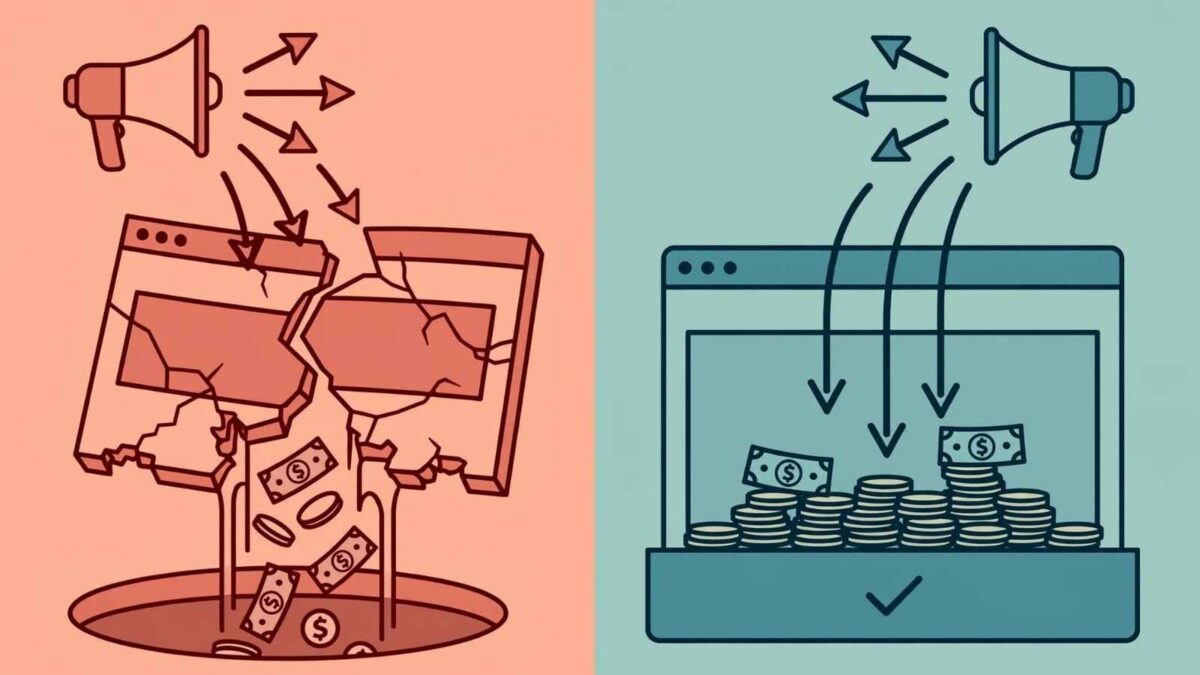
If pages load slowly, confuse visitors, or obscure the next step, each paid click becomes an avoidable expense, resulting in wasted ad spend.
Before increasing your campaign budget, check whether your website gives potential customers enough information and confidence to act. A few focused improvements can raise conversion rates while building an online presence that continues to attract prospects after an advertising campaign ends.
Table of Contents
Paid Clicks Disappear Without Conversion
Ad platforms charge for access to visitors, not completed sales. Campaign delivery can also change unexpectedly. Your website’s performance is within your control, and how to stop wasting ad spend is, too. By focusing on key areas, you can stop wasting ad spend and improve your overall marketing effectiveness.
Start by matching each advertisement to a relevant landing page. Someone who clicks an ad for emergency plumbing service shouldn’t end up on a general homepage and have to search for details. The destination should explain the service, identify the service area, and display a clear call button or short form. Even after attracting visitors, businesses need to make the website easy to navigate and give people a clear reason to get in touch, as explained in these tips for turning website traffic into leads and customers.
Test the page on a phone using mobile data. Check its loading speed, form fields, and navigation. Broader ad spend optimization includes reviewing audience targeting and technical performance, but even a well-targeted click is wasted when the destination creates friction.

Foundational Search Outlasts Ad Budgets
Organic search visibility gives your business another source of website traffic. Useful service pages, accurate business details, and consistent local information can help customers find you without requiring payment for every visit. These assets can keep working between seasonal campaigns or during months when advertising funds are limited.
Small service businesses that need a clearer starting point may benefit from local SEO training before committing more money to marketing. The aim should be to understand which improvements support visibility and how to prioritize them.
Create one detailed page for each core service instead of listing everything in a few sentences.
Include:
- Common customer concerns.
- Realistic service areas.
- Original photos where appropriate.
- Review page titles and contact details too.
👉 Search visibility takes time, so track qualified inquiries over several months instead of judging progress after a week.
Privacy Consents That Respect Users
Consent notices can damage the browsing experience when they cover the screen, use unclear choices, or make rejection difficult. Keep the notice readable and give visitors direct options. Ask only for permissions your website actually needs, then record and honor the user’s selection.
Audit the tracking tools connected to your site before changing the banner. A small business website may contain analytics scripts, advertising tags, embedded videos, and scheduling software added at different times. Remove tools that no longer provide useful information.
Explain data collection in plain language near forms. If you ask for a phone number, state how you’ll use it. Keep forms focused on details needed to answer the inquiry, such as the customer’s name, contact method, and requested service. Legal requirements vary by location, so seek qualified guidance for the markets you serve.
Turn Casual Browsers Into Inquiries Instead To Stop Wasting Ad Spend
A strong page answers the questions that typically delay contact. Visitors want to know what you provide, who you serve, where you operate, and what happens after they submit a request.
Put those answers close to the relevant call to action.
Review the path from landing page to confirmation message. A quote form with nine required fields may discourage someone who only wants to check availability. Ask for the minimum information needed to begin, then collect project details during the follow-up conversation.
After submission, confirm receipt of the request and set a realistic response time.
- Measure phone calls.
- Completed forms.
- Booked appointments instead of relying on page views.
- Compare those results with each traffic source and landing page.
When one page generates plenty of visits but few inquiries, revise its message or form before sending it another dollar of paid traffic.
Your next advertising campaign should begin only after you’ve completed a test inquiry on both a phone and a desktop computer. That simple check can reveal broken buttons, confusing fields, and missing confirmation messages before paying customers encounter them.
Conclusion: Stop Wasting Ad Spend On Your Small Business Website
Paid advertising can quickly drive people to your website, but it only works when those visitors can easily find what they need and take the next step. Slow pages, unclear messaging, mismatched landing pages, and cumbersome forms turn paid clicks into wasted ad spend, regardless of how well the campaign is targeted.
The most practical way to protect your budget is to treat your website as the conversion engine, not just a destination. Match each ad to a relevant page, test the experience on a phone, keep forms short, and measure actual inquiries instead of traffic alone.
At the same time, strengthen the assets that keep working after the ads stop: clear service pages, accurate local details, and content that answers real customer questions.
Before you stop wasting ad spend on the next campaign, complete a test inquiry on both mobile and desktop. Fix what breaks the path from click to contact.
👉 When the site is ready to convert the traffic it already receives, every dollar you put into advertising works harder, and the improvements continue to help long after the campaign ends.
FAQ
Does a slow website waste ad spend?
Yes. When a page loads slowly, visitors often leave before they see your offer or contact details. You still pay for the click, but you lose the chance to convert it into a call or quote request.
Should I pause ads until my landing page converts better?
Not always, but you should fix the biggest friction points first. A mismatched landing page, a confusing form, or a slow mobile experience can waste more budget than a modest increase in spend. Test and improve the page, then evaluate whether more budget makes sense.
How do I know if my ad traffic is converting?
Look past page views and click volume. Track phone calls, completed forms, and booked appointments, then compare those results by traffic source and landing page. A page that gets many visits but few inquiries needs attention before you send it more paid traffic.
Can organic search replace paid ads for a small service business?
Organic search rarely replaces ads overnight, but it can reduce your reliance on paid traffic over time. Clear service pages, accurate local details, and content that answers real customer questions can continue bringing visitors even when ad budgets are limited or paused.
What’s the first thing to fix if paid clicks aren’t turning into inquiries?
Check the path from the ad to the action. Make sure the landing page matches the ad, loads quickly on a phone, and has a short, clear way to get in touch. Then complete a test inquiry yourself on both mobile and desktop to catch broken buttons, confusing fields, or missing confirmation messages.
Disclosure: This Small Biz Tipster blog post may contain affiliate links. I may earn a commission from qualifying purchases at no extra cost to you. Some sections were drafted with AI tools and carefully reviewed/edited by me.

I’m Lisa Sicard, founder of Inspire To Thrive.
Small Biz Tipster is my dedicated space for straightforward, no-nonsense tips that help small business owners grow smarter and faster. Voted in the Top 100 Small Business Blogs by Feedspot for 2025 and 2026, and with over 30 years of hands-on digital marketing experience, I share simple strategies here so you can save time on social media, attract more customers, and focus on what you love — running your business. Through Inspire To Thrive, I also provide social media management, training, and consultations.