
When demand goes up but your hours don’t, your home-based one-person business can start to feel like a too-small suitcase. As a solopreneur, you can cram more in, but it’s stressful.
If you don’t want employees (and the management that comes with them), you still have options. How to scale a home-based business without employees (your scaling strategy for sustainable growth) comes down to three moves: increase capacity with systems, raise value with better offers, and reduce manual work with automation.
Table of Contents
Key Takeaways
- Scale without employees by doing three things well: build repeatable systems, raise the value of your offers, and automate routine work.
- Start with your biggest time bottleneck, then run a quick time audit to cut, batch, or template the low-value tasks.
- Track one weekly metric for 30 days (like leads, reply time, close rate, delivery time, or profit per project) so you can improve what matters.
- Put a floor under your calendar by raising minimums (minimum project size, paid consults, or limited client slots).
- Make revenue grow faster than hours by productizing services into clear packages with fixed steps, timelines, and pricing.
- Add a steadier income with recurring monthly plans that include one call, one deliverable, and one KPI.
- Automate the front end (inquiry form, auto-reply, booking, invoices, onboarding, follow-ups), so sales keep moving while you work.
- Expand what you can deliver through freelancers and partners, so you can sell more without adding payroll.
Start by fixing the bottleneck that is stealing your time
Scaling starts when you name what’s actually limiting you. For most solopreneurs, it’s one of these time management issues: not enough leads, slow delivery, constant back-and-forth, or decision fatigue.
Pick the biggest pain point, not the most annoying one.
Do a 10-minute audit today. List everything you do in a normal week. Circle the high-value activities only you can do (strategy, final approvals, key sales calls). Then mark the rest for repeatable systems, a template, or automation.
Next, choose one metric to watch for 30 days to validate your business idea so growth is real, not a vibe: reply time, leads per week, close rate, delivery time, or profit per project.
If you can’t measure it weekly, you can’t improve it calmly.

How to scale a home-based business without employees: Do a simple time audit, then cut, batch, or template
Start with your biggest time sink, then simplify it fast. For example,
- Batch social posts on one day a week.
- Save email snippets for common replies (pricing, next steps, FAQs).
- Build a one-page project checklist as part of your standard operating procedures (SOPs), so you don’t “rethink” every delivery.
Small changes stack, as long as you don’t try to fix everything at once.
Raise your minimums so you do less work for the same money
Put a floor under your calendar to better manage overhead costs. That could mean a minimum project size, a paid consult before custom quotes, or limited weekly client slots.
Higher standards often improve results because you attract clients who respect your process, and you avoid the stressful ones.
Make your offer scalable so that revenue can grow faster than your hours
In a service-based business, if your model sells only time, your income quickly hits a ceiling. Instead, sell packaged outcomes people understand and can say yes to. Three paths work well from home:
- Productized services.
- Recurring plans.
- Digital products (templates, guides, a mini course).
Keep it simple: pick one core offer, then add one upsell. You’ll deliver faster because you repeat the same steps, like cooking one great dish instead of running a full diner menu.
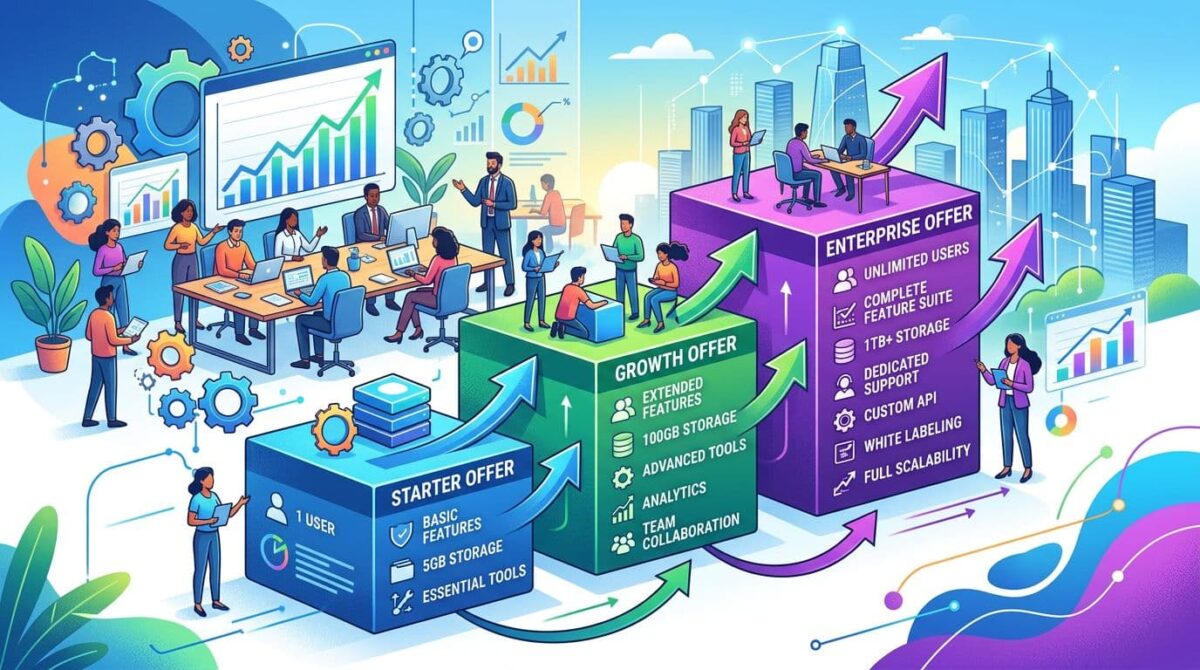
Productize your service into clear packages with set steps
“Productize” means your service has a fixed scope and process. Offer a Starter, Standard, and Premium option, each with a clear timeline and price.
Fixed scope makes it easier to automate parts later, even if you stay solo.
Add recurring revenue with a monthly plan people can stick with
Monthly plans reduce the constant hunt for new work while improving revenue generation. Try website care, bookkeeping check-ins, social media reviews, coaching office hours, or maintenance reminders.
To keep it easy, aim for one call, one deliverable, and one KPI per month. Use tools like accounting software and CRM systems to manage recurring deliverables and client check-ins.
Use automation, AI, and partners to scale delivery without employees
In 2026, solo scaling often means that automation tools and workflows handle routine work, while you handle judgment. If you want ideas for how AI fits into solo growth, see this overview of scaling solo with AI.
Automate the front end: leads, booking, payments, and follow-up
A simple flow saves hours with marketing automation:
- Inquiry form.
- Auto-reply with next steps.
- Calendar booking.
- Invoicing.
- Onboarding email.
Fast replies and automated systems deliver strong ROI on sales, even when you’re busy.
Grow through partnerships instead of payroll
Leverage partnerships and outsourcing to freelancers to expand what you can sell without hiring. For example, pair with freelancers like a designer and copywriter to bundle a launch package, or team up with remote talent such as a tech setup pro alongside a trainer; even use virtual assistants to scale delivery.
You stay independent because you share customers, not payroll, and you keep roles clear in your virtual office.
Conclusion: How to Scale a Home-Based Business Without Employees
As a solopreneur, you don’t need employees to scale a home-based business; you need focus. Find your bottleneck, simplify into a scalable offer, then use automation and partnerships to increase capacity.
This week, choose one system to build (a template, a package, or a booking flow) for your one-person business, then commit to a 30-day test. What would change if your business could achieve sustainable growth without taking over your life?

Frequently Asked Questions About Scaling a Home-Based Business Without Employees
How to Scale a home-based business without employees?
You scale by building a business that runs on systems, not constant personal effort. Start by writing down your repeatable work (lead intake, quotes, onboarding, delivery, invoicing, follow-up). Then tighten each step until it’s clear enough to hand off to a tool or a contractor later.
Next, focus on offers that don’t require you to be “on” all day. For example, packaged services (fixed-scope, fixed-price) are easier to deliver than custom work because you can reuse the same processes and templates. If you sell products, keep your catalog tight so you’re not managing a thousand small tasks.
What should you automate first when you’re trying to grow solo?
Automate anything repetitive, time-sensitive, and not requiring your judgment. That usually starts with lead handling and admin.
Before you automate, clean up the step you’re trying to speed up. Otherwise, you’ll make a messy process happen faster. A good test is this: if you can’t explain the step in two sentences, it’s not ready.
Also, keep your tool stack light. A calendar tool, email templates, a payment processor, and a basic project tracker can cover a lot. Once those pieces work, you can add more, but you won’t need fancy software to see real relief.
Can you outsource work if you don’t want employees?
Yes, because you can scale with contractors and freelancers without putting anyone on payroll. The key is to outsource tasks, not your whole business, at least at first. Look for work that’s easy to define and review, like bookkeeping, customer support replies, design edits, basic video editing, or website updates.
How do you avoid burning out while growing a business from home?
You avoid burnout by designing growth around capacity, not ambition. First, set a weekly workload limit that leaves room for real life. Then build your business to fit inside that limit, even when things get busy.
Start by getting honest about where your time goes. If you’re doing lots of tiny tasks, batch them. For example, answer emails twice a day instead of all day. If client work keeps expanding, tighten your scope. A clear package with set deliverables protects your schedule and makes pricing easier.
Next, stop treating every customer request as urgent. Put turnaround times in writing, use a simple intake process, and require payment terms that work for you. In addition, block off “maker time” for deep work, because constant context switching drains you fast.
At home, boundaries matter more. A separate workspace helps, even if it’s just one corner. So does a shutdown routine (close tabs, write tomorrow’s top three, walk away).