
Seasonal cash flow revenue can make a healthy business feel unpredictable. A landscaping company may collect most of its income in warmer months, while a retailer may depend on holiday sales. The key is to plan for those swings before they become urgent. For short-term gaps that a forecast can support, options such as the Bluevine Line of Credit may be one part of a broader cash flow strategy.
Effective planning does not require perfectly predicting every sale. It requires knowing when cash is likely to arrive, when essential bills are due, and how much flexibility the business needs to continue operating through slower months.
Table of Contents
Key Takeaways
- Recognize seasonal patterns: Review past sales and expenses to anticipate busy and slow periods.
- Forecast seasonal cash flow: Track expected income, essential bills, and seasonal costs throughout the year.
- Build cash reserves: Save during stronger months to cover essential expenses during slower periods.
- Control spending: By adjusting inventory, staffing, and discretionary costs to match expected demand.
- Improve cash inflows: Invoice promptly, follow up on overdue payments, and explore off-season revenue opportunities.
- Compare funding options: Consider financing only when the costs and repayment schedule fit the business’s cash flow.
What Seasonal Cash Flow Means
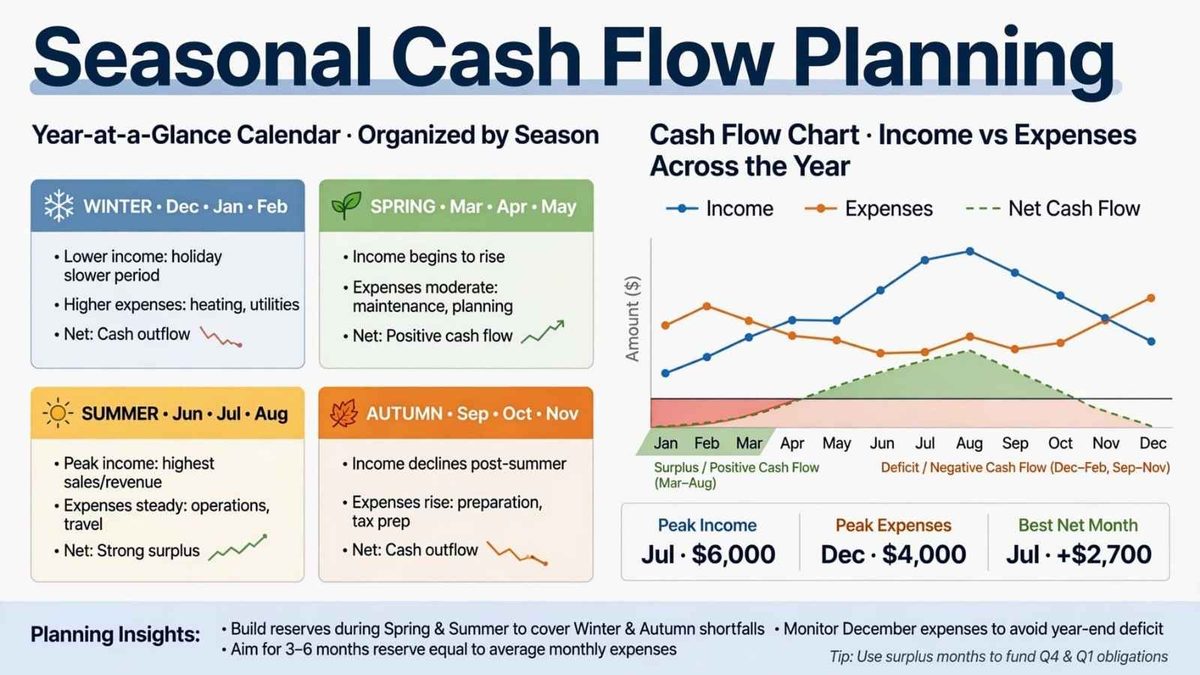
Seasonal cash flow is the predictable rise and fall of cash coming into and leaving a business over the course of the year. Revenue may increase during a busy season, but fixed costs such as rent, insurance, software, and core payroll may continue year-round.
Tourism businesses, tax preparers, event providers, construction firms, retailers, and outdoor service companies often face this pattern. A seasonal slowdown is different from an unexpected cash crisis.
A slowdown is a recurring period that can be anticipated and budgeted for. A crisis may result from an unforeseen event, a lost customer, a delayed payment, or an expense that was not included in the plan.
Why Cash Flow Planning Matters
Strong annual sales do not guarantee that a company will have enough cash in a particular month. Inventory may need to be purchased before peak demand, payroll may be due before customers pay invoices, and taxes can create obligations that do not match the timing of sales.
A written forecast helps owners make more deliberate decisions about hiring, purchasing, marketing, and financing. The Small Business Administration notes that off-season periods can be used to develop budgets and forecast business cash flow before the next busy period begins.
How To Spot Seasonal Patterns
Review Past Business Records
Start with at least 12 months of bank activity, sales reports, invoices, payroll records, inventory purchases, supplier bills, and tax payments. If two or three years of records are available, compare the same months across each year.
Mark the months with the highest sales, the lowest bank balances, and the largest increases in expenses.
Look For Repeating Signals
Patterns may include a sales dip at the same time each year, increased staffing before a rush, larger inventory orders ahead of a holiday, or recurring delays after major projects. These signals help distinguish a normal seasonal need from a problem that requires a different response.
How To Build A 12-Month Cash Flow Forecast
- List opening cash. Begin with the money currently available in business accounts.
- Estimate monthly cash receipts. Use conservative assumptions based on sales history, invoices, and payment timing.
- Record fixed expenses. Include rent, insurance, subscriptions, debt payments, and core payroll.
- Add variable expenses. Account for inventory, materials, shipping, advertising, and seasonal labor.
- Calculate the monthly result. Subtract planned cash outflows from expected cash inflows.
- Test scenarios. Model a typical season, a slower season, and a stronger one.
- Update monthly. Replace estimates with actual results and revise the next 12 months.
How To Create A Cash Buffer
A cash reserve reduces pressure when a predictable slow period arrives. Set the target around essential operating costs, such as payroll, rent, insurance, taxes, and key supplier payments, rather than every discretionary expense. Build it during stronger months, keep tax money separate, and establish rules for when the reserve can be used and how it will be replenished.
Ways To Control Costs During Slow Months
- Separate costs that must be paid from spending that can be postponed.
- Review software, advertising, storage, and service subscriptions for unused expenses.
- Discuss payment terms with suppliers before cash becomes tight.
- Use staffing plans that match expected demand where practical.
- Reduce excess inventory and avoid tying up cash in slow-moving products.
- Schedule maintenance, training, and process improvements during quieter periods.
Ways To Improve Off-Season Revenue
Off-season revenue does not need to match peak-season sales to be valuable. Consider related services that use existing skills or equipment, early-booking offers for the next season, maintenance plans, prepaid packages, memberships, retainers, or outreach to a different customer group.
Faster invoicing and consistent follow-up on overdue accounts can also improve the timing of cash receipts.
Funding Options For Seasonal Gaps
Financing can help manage a timing gap, but it works best when it fits a realistic repayment plan. Compare total cost, fees, repayment requirements, and the effect on future monthly cash flow before accepting funds.
Business Lines Of Credit
A revolving credit option may suit short-term needs such as inventory purchases or payroll timing gaps. Terms, fees, approval standards, and repayment structures vary, so borrow only an amount the forecast shows the business can repay.
Term Loans, Invoice Financing, And Internal Tools
A term loan may fit a defined one-time purchase, but fixed payments can be difficult during low-revenue months. Invoice financing may improve near-term liquidity when qualified customer invoices are unpaid, although fees and invoice terms affect the cost.
Supplier terms, customer deposits, milestone billing, preorders, and retainers can reduce the need for outside financing.
A Simple Seasonal Cash Flow Action Plan
- 90 days before the slow season: Review prior results and estimate the likely cash gap.
- 60 days before: Adjust inventory, staffing, supplier terms, and marketing activity.
- 30 days before: Confirm reserves, expected receivables, and essential expenses.
- During the slow season: Compare actual cash flow with the forecast each week.
- Afterward: Record results, refine assumptions, and prepare for the next cycle.
Frequently Asked Questions
How Much Cash Should A Seasonal Business Keep?
The right amount depends on essential monthly costs, the length of the slow season, payment timing, and the size of revenue swings. Calculate the cash needed to cover critical obligations instead of relying on a universal target.
What Records Help With Seasonal Cash Flow Planning?
Useful records include bank statements, sales reports, invoices, payroll documents, inventory reports, tax records, and supplier bills. T
The IRS explains that a recordkeeping system should clearly show income and expenses and retain supporting business documents such as invoices, receipts, and paid bills.
What Is The Biggest Warning Sign Of A Cash Flow Problem?
Repeated difficulty covering payroll, taxes, supplier bills, or other essential costs despite ongoing sales is a serious warning sign.
Review the forecast promptly, identify the cause of the gap, and consider speaking with a qualified accountant or financial adviser.
Final Takeaway
Seasonal cash flow is easier to manage when it is treated as a recurring business pattern rather than a surprise. By reviewing past sales, expenses, and payment schedules, owners can identify when revenue typically rises or slows and prepare for those changes in advance.
Accurate records, realistic forecasts, cash reserves, cost controls, and timely collections can help ensure sufficient funds for essential expenses during quieter periods. Businesses can also plan inventory purchases carefully, review supplier terms, and delay nonessential spending when cash is limited.
If additional funding is needed, comparing available options early can help owners understand the costs and repayment requirements before a shortfall becomes urgent. Regularly updating the cash flow plan as conditions change also makes it easier to respond to unexpected expenses or lower-than-expected sales.
With consistent preparation and practical financial decisions, a business can enter slower months with a clearer plan, greater flexibility, and a better understanding of its upcoming obligations.
I’d love to hear about your seasonal cash flow system in the comments below.
Disclosure: This Small Biz Tipster blog post may contain affiliate links. I may earn a commission from qualifying purchases at no extra cost to you. Some sections were drafted with AI tools and carefully reviewed/edited by me.

I’m Lisa Sicard, founder of Inspire To Thrive.
Small Biz Tipster is my dedicated space for straightforward, no-nonsense tips that help small business owners grow smarter and faster. Voted in the Top 100 Small Business Blogs by Feedspot for 2025 and 2026, and with over 30 years of hands-on digital marketing experience, I share simple strategies here so you can save time on social media, attract more customers, and focus on what you love — running your business. Through Inspire To Thrive, I also provide social media management, training, and consultations.