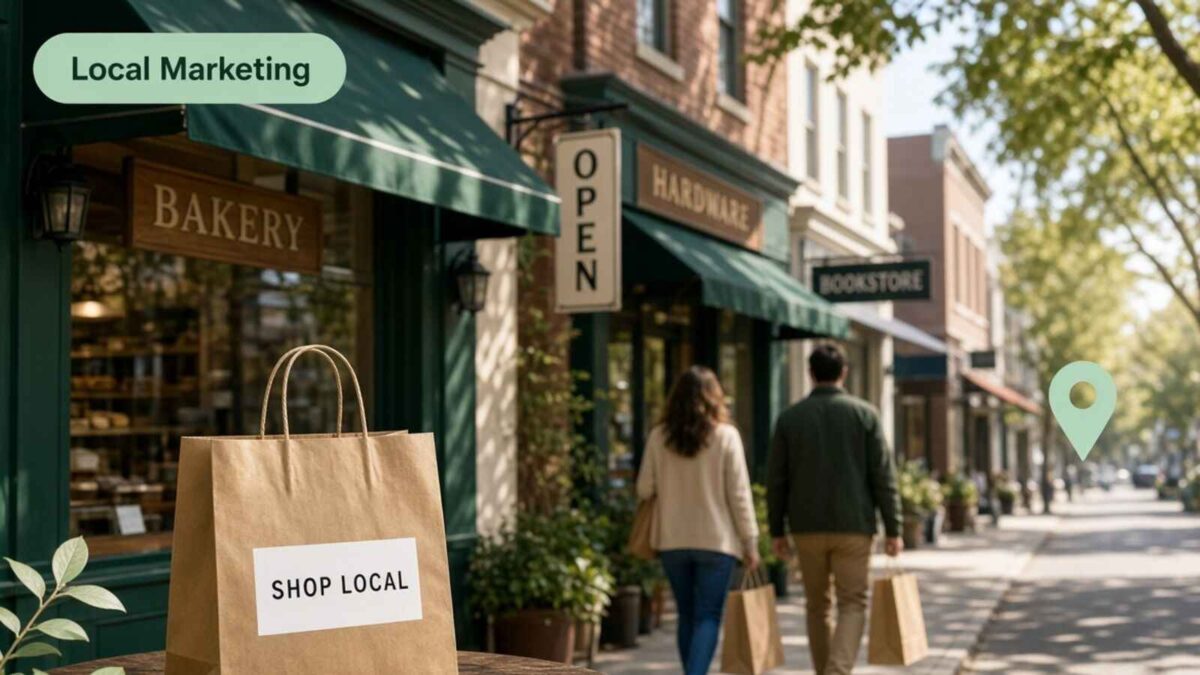
7 ways to get found nearby—without a huge ad budget.
Local marketing is how a small business gets chosen by people who already live or work close enough to buy. Not “go viral.” Not “rank nationally.” Get the phone to ring, the map pin to get tapped, and the neighbor to walk in.
If you already have listings and a few backlinks pointing at this topic, the win is not a new URL. It is making this page the clearest, most current answer on the subject.
Table of Contents
Key takeaways
- A complete, active Google Business Profile is still the highest-return local asset most small businesses ignore.
- Review velocity (new reviews this month) matters more in 2026 than a pile of old five-stars from 2021.
- NAP must match everywhere: name, address, phone, hours, URL.
- Local SEO on your website supports the map pack. It does not replace GBP, reviews, or citations.
- Community, partnerships, and a little consistent content beat random posting.
- Paid local ads work after the listing looks trustworthy—not before.
- Measure calls, direction requests, and booked jobs—not likes.
What local marketing actually is
What is local marketing? It’s promoting your offer to people close enough to buy: a town, a cluster of towns, or a service radius. National brand ads don’t replace that.
It includes:
- Showing up when someone searches “near me” or “[service] in [town].”
- Being accurate on maps and directories.
- Earning recent reviews.
- Showing up in the community so people already know your name when they need you.
- Using social, email, and a few well-placed ads in your radius—not the whole country.
It is not the same thing as brand marketing for an online-only shop. If a customer has to drive, you book a house call, or they choose you over the chain down the road, this is your lane.
Related: Launch Your Local Business With These 5 Powerful Strategies
Why it still works in 2026
People still search with their feet in mind.
- About 46% of Google searches have local intent.
- A large share of mobile local searchers visit or call within 24 hours.
- A complete Google Business Profile tends to get more direction requests and more website clicks than a half-empty one.
- “Near me” and voice searches keep rising because phones and AI assistants default to “what’s close and open.”
That is why a bakery in a neighborhood, a plumber covering three towns, or a bookstore on Main Street can beat a bigger brand in that zip code. You are closer, faster, and easier to trust if your information is complete.
The 7 local marketing strategies that still work
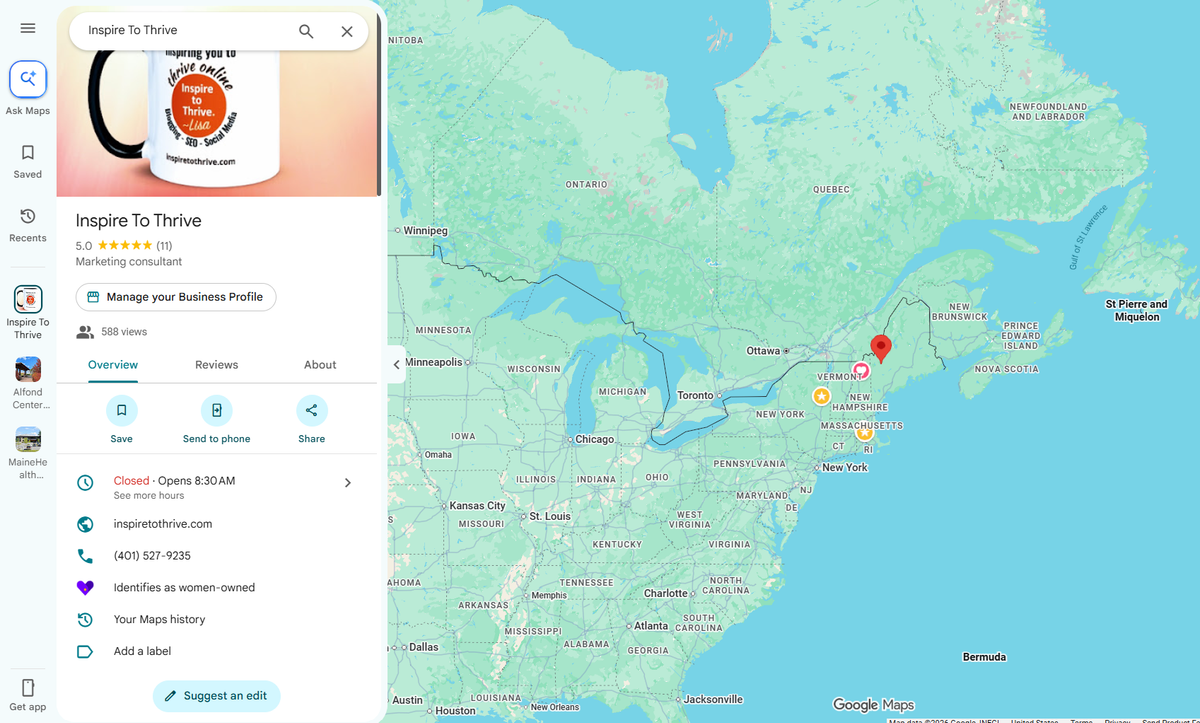
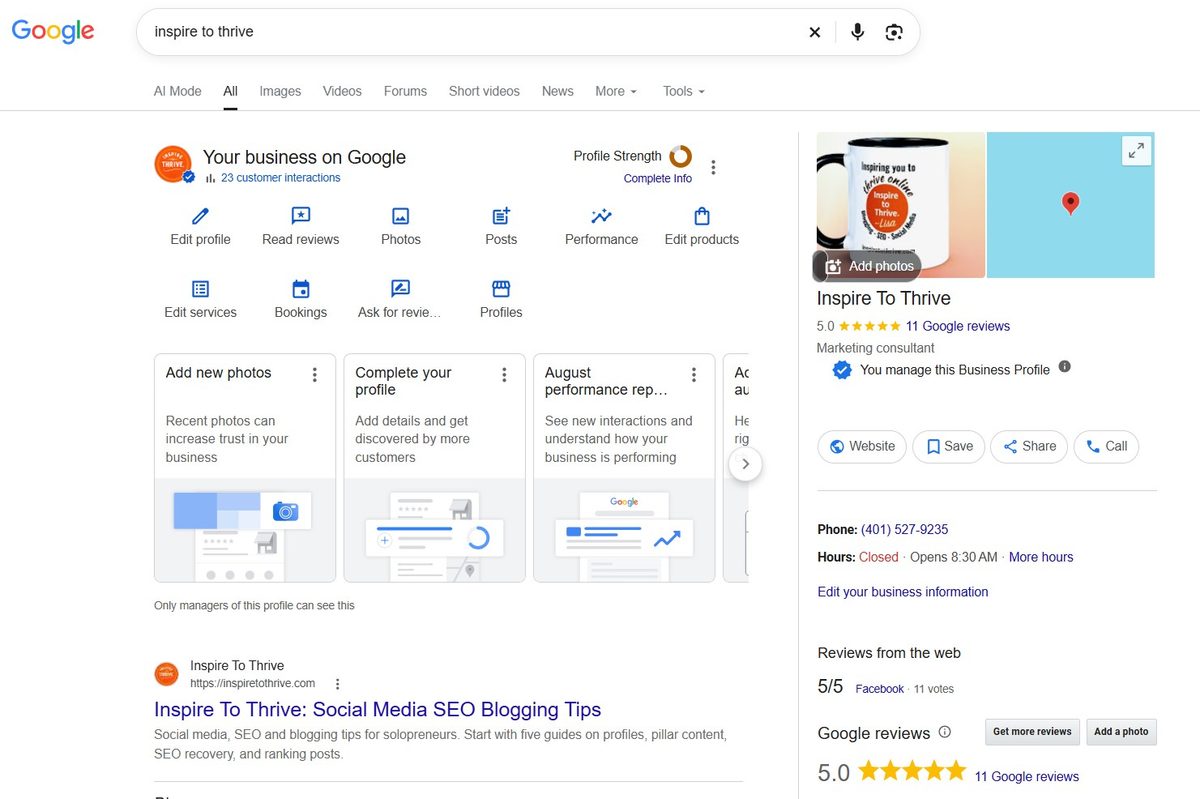
1. Treat Google Business Profile like a storefront, not a listing
Google Business Profile (GBP)—the old “Google My Business”—is the first thing most local buyers see. Treat Google posts like small local marketing campaigns: one photo, one fact, one next step. Hours, a seasonal offer, or “now booking” beats a generic slogan.
Do this once, then keep it warm:
- Claim and verify the profile.
- Pick the most accurate primary category, then add secondary categories you actually offer.
- Write a real description with the town and services you want to be found for. No keyword stuffing.
- Add services or products with plain-English names.
- Put hours that match the door. Holiday hours matter.
- Add photos taken at your place: storefront, team, work in progress, finished jobs. Fresh photos beat stock.
- Post something useful every week or two: an offer, a seasonal reminder, a before/after, a “now booking.”
- Answer Q&A. If no one has asked yet, add the questions customers already text you.
Step-by-step guide to the Google Business Profile: How to use Google Business Profile.
This week: open the profile, fix hours, add 5 real photos, and publish one post.
2. Build review velocity, not a dusty review count
Old reviews help. New reviews move you.
Ask right after the win—when the job is done, the order is picked up, or the appointment went well. One link. One platform first (Google, for most local businesses).
Keep the path short:
- Save the review link in your phone, invoice footer, and thank-you email.
- Ask in person or by text the same day.
- Reply to every review, good or bad. Short and human is enough.
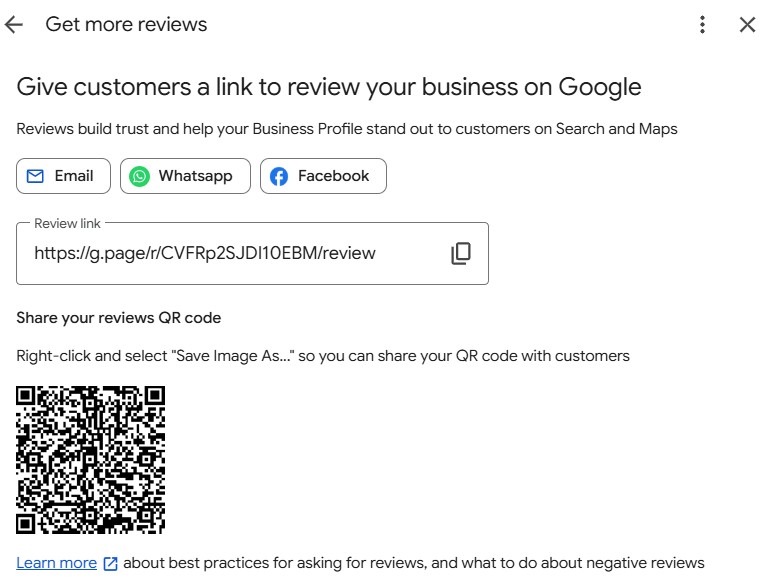
Scripts and timing: Outstanding Tips on How to Ask for Reviews in 2026.
Do not buy reviews. Do not gate “only happy customers.” Ask everyone you served well, and fix the rest offline.
This week: send 10 honest review requests to recent customers.
3. Clean up directories and keep NAP identical
Citations still matter when they are consistent when marketing a local business. They matter less when the same business has three different phone numbers online.
NAP = Name, Address, Phone. Add hours and website to that list.
Priority places:
- Google Business Profile.
- Apple Business Connect / Apple Maps.
- Bing Places.
- Facebook.
- Yelp (if your category lives there).
- Your chamber of commerce.
- One or two industry directories your customers actually use.
Then stop collecting random listings just to keep a count.
More: Why a local online business directory still matters, Local business directory listings, and What is a directory listing?.
This week: write down your official NAP and fix every listing that does not match it.
4. Make the website back up the map pack
Your site will not replace GBP. It should agree with it. These local business marketing strategies only work if the site and the listing agree: same name, same phone, same towns you actually serve.
On-page basics that still pay:
- Put the town and service in the title tag and H1 on location or service pages (“Emergency plumber in Farmington, ME”).
- Show NAP in the footer on every page.
- Create one page per real location. If you are a service-area business with no public storefront, say the towns you cover and do not fake a storefront address.
- Add LocalBusiness schema (Rank Math can do this).
- Use words people actually type: town names and the job they need done.
- Make click-to-call obvious on mobile.
Local backlinks still help: chamber, sponsorship page, local news, a partner business. Relevant and nearby beats random guest posts.
This week: add or fix footer NAP and name the towns you serve on the main service page.
5. Publish content only a local business could write
Generic “10 marketing tips” posts do not win local customers. Pages that mention real places, seasons, and problems do.
Useful local content:
- “How we handle [season] in [town]”.
- A short guide to choosing a [plumber/bakery/bookstore] in your area.
- Recap of a community event you sponsored or hosted.
- FAQ pages that match real phone questions (“Do you serve [neighboring town]?”).
- Honest “what this job costs in our area” ranges.
One good local page a month beats 12 thin posts. Same story can feed social and GBP.
This week: list the five questions customers ask most. Turn the best one into a page or a GBP post.
6. Show up in the community on purpose
People hire businesses they have already seen.
Low-cost options that still work:
- Join the chamber and go to after-hours events.
- Sponsor one local thing you can put a banner or a link on.
- Partner with a complementary local business and share a simple offer.
- Host a short workshop or open house.
- Mix in physical advertising where people already drive or walk.
Pick two community plays you can keep doing.
👉 This week: pick one event or partner and put a date on the calendar.
7. Use social and ads in a tight radius
Social keeps locals warm. Ads fill gaps after the listing is solid.
On social:
- Join local Facebook groups and help before you pitch.
- Share work from this week, not stock quotes.
- Put the town in the caption when it is natural.
- Short real Reels still outperform polished ads for most small shops — Instagram marketing for small business and social media to market your business.
On ads:
- Geo-target only the towns you can serve.
- Send traffic to a page with NAP, a phone number, and one offer.
- Check Local Services Ads before a broad Search campaign if your category qualifies.
- Turn ads off for zip codes you cannot reach profitably.
Traditional marketing methods still belong in many towns.
👉 This week: tighten the geo radius on any live ad. If you have no ads, skip them until GBP and reviews are moving.
A 30-day local marketing plan
Week 1 — Foundation
Claim/fix GBP. Match NAP. Add photos. Turn on messaging only if you will answer it.
Week 2 — Proof
Ask 10 customers for Google reviews. Reply to every current review.
Week 3 — Website
Update the main service or location page. Footer NAP. Click-to-call. One FAQ section.
Week 4 — People
One community action + two useful social or GBP posts from real work.
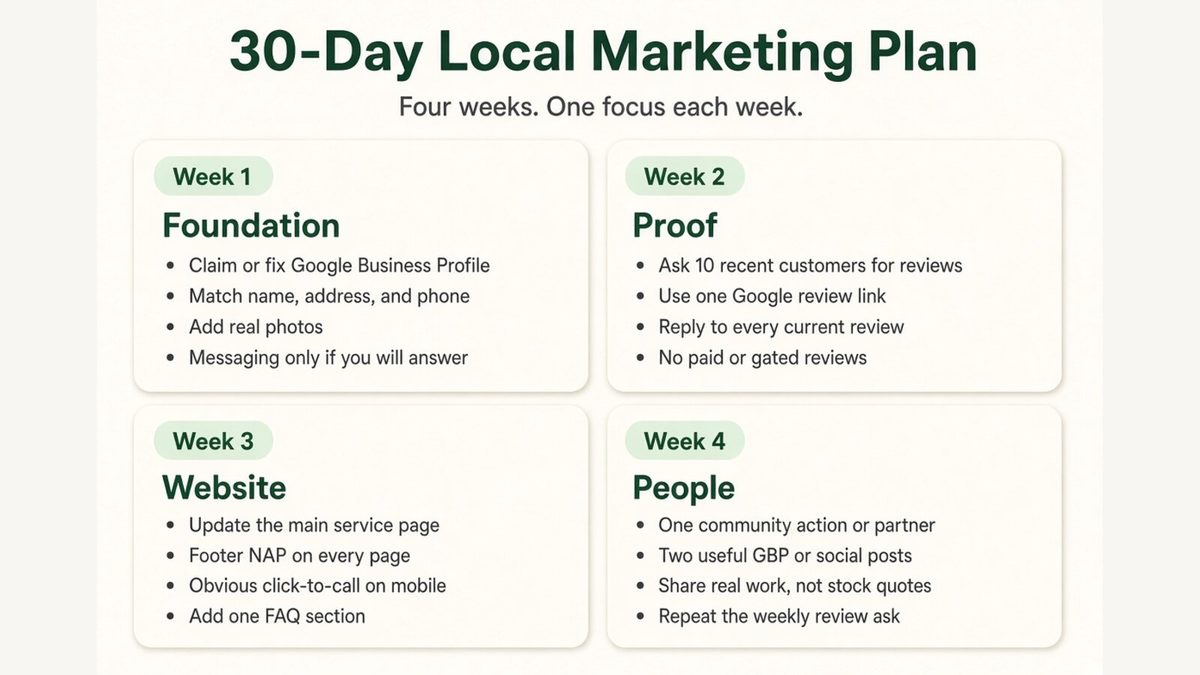
Then repeat: reviews every week, photos every month, one local page or post, one in-person touch.
How to measure what is working
Watch these before likes:
- GBP views, direction requests, calls, and website taps.
- Number of new Google reviews this month.
- Calls and form leads from town-name pages.
- Booked jobs you can tie to “found you on Google / a neighbor”.
If calls are up and the calendar is not, the leak is usually response time or the offer—not the listing.
Local marketing vs. local SEO
- Local SEO is the search piece: GBP, maps, citations, on-page location signals, reviews.
- Local marketing is the whole system: search plus community, partnerships, social, events, and sometimes ads.
👉 You want both. SEO gets you found. The rest gets you chosen.
FAQ
Do I need a storefront for local marketing?
No. Service-area businesses can get calls if they are honest about coverage, keep NAP consistent, and do not invent a public address.
How long until this works?
GBP and reviews can move in 30–90 days. Competitive town + service rankings often take 4–6 months. Community trust takes longer and lasts longer.
How many Google reviews do I need?
Enough recent ones to look alive next to competitors. In many small towns, 15–40 strong, recent reviews with replies already put you ahead.
What is the cheapest tactic that still works?
A complete GBP, a review ask after every good job, and one regular local event.
Should I pay for more directories?
Only if your customers use that directory. A chamber listing and two industry sites beat 50 junk citations.
Where does AI search fit?
AI overviews and assistants pull from complete profiles, clear service pages, and recent reviews. Clean data and plain answers help you get cited.
Conclusion
Local marketing is not a hack. It is a short list you repeat.
The local marketing pros aren’t secret tools. They’re the boring basics done on schedule: profile, reviews, matching NAP, and one real-world touch a month.
Keep the profile accurate. Get new reviews. Make the name, address, and phone match. Put the town on the pages it deserves. Be visible in the community. Spend ad money only after the listing looks like a business people can trust.
👉 Same URL, current advice, clearer steps. That is how those existing backlinks start working harder.
I’d like to hear what is working in your town this year—GBP posts, reviews, a chamber event, or something offline that still brings people in.
Related reading
- Don’t Fall Behind The Competition: 4 Things To Do Today
- How To Get New Customers via Traditional Marketing Methods
- How Small Businesses Are Building Big Brands In 2026
- 4 Marketing Errors You Need To Avoid In 2026
Disclosure: This Small Biz Tipster blog post may contain affiliate links. I may earn a commission from qualifying purchases at no extra cost to you. Some sections were drafted with AI tools and carefully reviewed/edited by me.

I’m Lisa Sicard, founder of Inspire To Thrive.
Small Biz Tipster is my dedicated space for straightforward, no-nonsense tips that help small business owners grow smarter and faster. Voted in the Top 100 Small Business Blogs by Feedspot for 2025 and 2026, and with over 30 years of hands-on digital marketing experience, I share simple strategies here so you can save time on social media, attract more customers, and focus on what you love — running your business. Through Inspire To Thrive, I also provide social media management, training, and consultations.