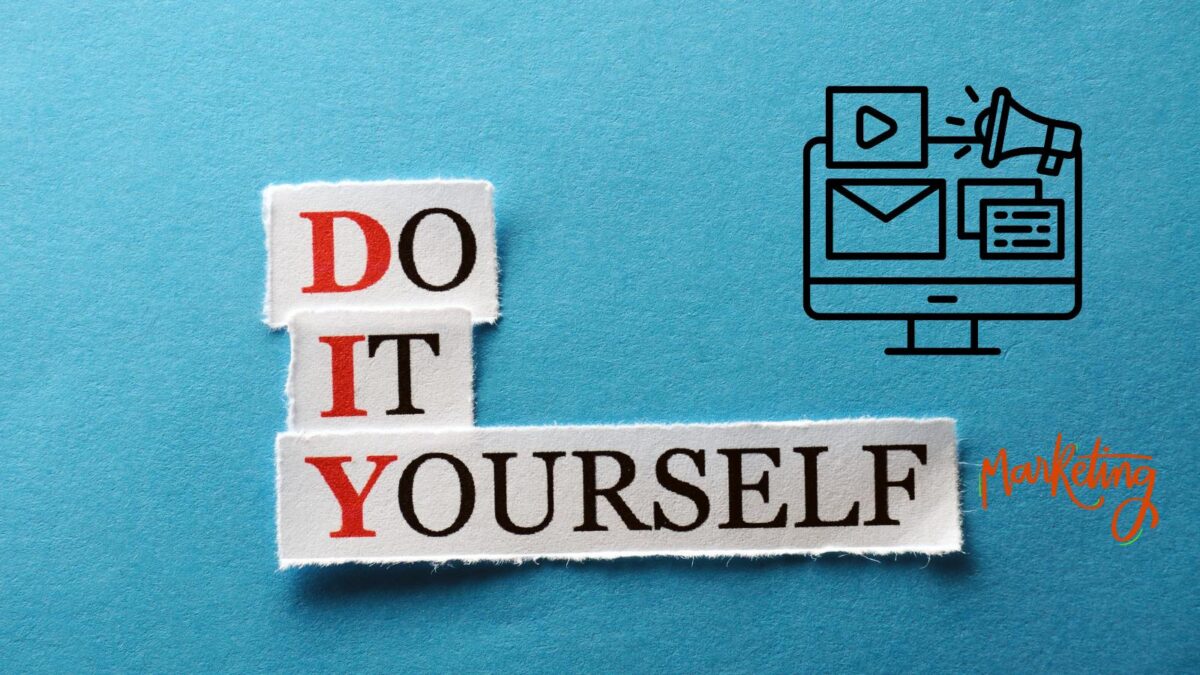
Every business needs marketing, but the big decision is who should handle it. DIY marketing has become popular today. You can try to manage everything on your own, balancing campaigns with your daily work.
Alternatively, you can hire someone with more experience to step in and assist. Each approach has strengths and limits.
Table of Contents
What’s the Difference?
DIY marketing gives you complete control and lower costs, but it can consume a significant amount of your time. Outsourcing can bring fresh ideas and proven tactics, yet it sometimes means a higher budget and less control over every detail.
To grow your business, you’ll need to select the option that best aligns with your skills, goals, and available resources. Which path fits your style and schedule?
Do it yourself – DIY Marketing
Doing your own marketing gives you full control over how you present your brand. It’s also a cost-effective option if you’re on a tight budget.
However, marketing can be time-consuming – perhaps too much so for some busy entrepreneurs. You also need to have a certain degree of marketing know-how to do it properly.
Some of the most common DIY marketing tasks include social media marketing, blogging and email marketing as these typically don’t require too much technical skill (unlike web development, app development or video production).

Delegate it to employees
Delegating marketing to employees can be a way of keeping your marketing in-house (providing you with more control), while not having to dedicate your own time to it. If you want your marketing to be handled professionally, it could be worth hiring a dedicated employee with marketing experience to handle this role.
Some larger companies set up marketing departments. If you’ve got a small company and you can’t afford to hire any more employees, you may still be able to delegate tasks among your existing team members, however you should consider that they may not be qualified or may not have the time themselves to take on extra duties.
Hire help from freelancers
Rather than hiring in-house employees, you could always outsource a freelancer to take over marketing tasks. This gives you access to qualified specialist professionals, while likely being cheaper than hiring full-time employees.
It may also be more suitable if you just want to delegate one-off jobs like the occasional blog post or creating a video advert. Make sure to take your time to compare rates and reviews.
Popular platforms to find freelancers through include Fiverr, Upwork and Freelancer.
Use a marketing firm
Marketing firms typically consist of teams of marketing specialists. These companies can be outsourced to take on ongoing marketing tasks like social media marketing or SEO.
Alternatively, you can hire them to take over one-off campaigns. You’ll pay more to outsource a marketing firm than you will to outsource an employee, but you’ll get access to a more comprehensive service.
Larger companies can particularly benefit from working with firms when they want to give their marketing a push or potentially even rebrand.
Automate it with AI with DIY Marketing
Certain marketing tasks may be possible to automate using AI. In fact, it’s now possible to use AI tools to build websites, write blog posts, create and schedule social media content, compass and send emails, generate images and even generate videos.
Of course, use of AI can still be detected in many cases and may put some customers off. AI tools are also not immune to errors, which could be embarrassing for your business.
Often, use of AI requires careful prompting and editing, which still require dedicating time to marketing and having some marketing know-how – it is better used as a tool rather than a crutch.
Conclusion: DIY Marketing vs. Hiring Out
Deciding between DIY marketing or Ihiring help comes down to your time, skills, and goals. Managing campaigns yourself can save money and give you direct control, but it often means longer hours and a steeper learning curve.
Outsourcing lets you tap into expertise right away, which can drive faster results but costs more and can put you at a distance from your brand’s voice. Think about what matters most to your business right now.
If you find yourself stretched thin or need specialized help, it might be time to bring in a pro. On the other hand, rolling up your sleeves on your own DIY marketing can work well if you want to keep things simple and run lean.
Take stock of your priorities so you make a choice that saves you time and helps you grow.

I’m Lisa Sicard, founder of Inspire To Thrive.
Small Biz Tipster is my dedicated space for straightforward, no-nonsense tips that help small business owners grow smarter and faster. Voted in the Top 100 Small Business Blogs by Feedspot for 2025 and 2026, and with over 30 years of hands-on digital marketing experience, I share simple strategies here so you can save time on social media, attract more customers, and focus on what you love — running your business. Through Inspire To Thrive, I also provide social media management, training, and consultations.