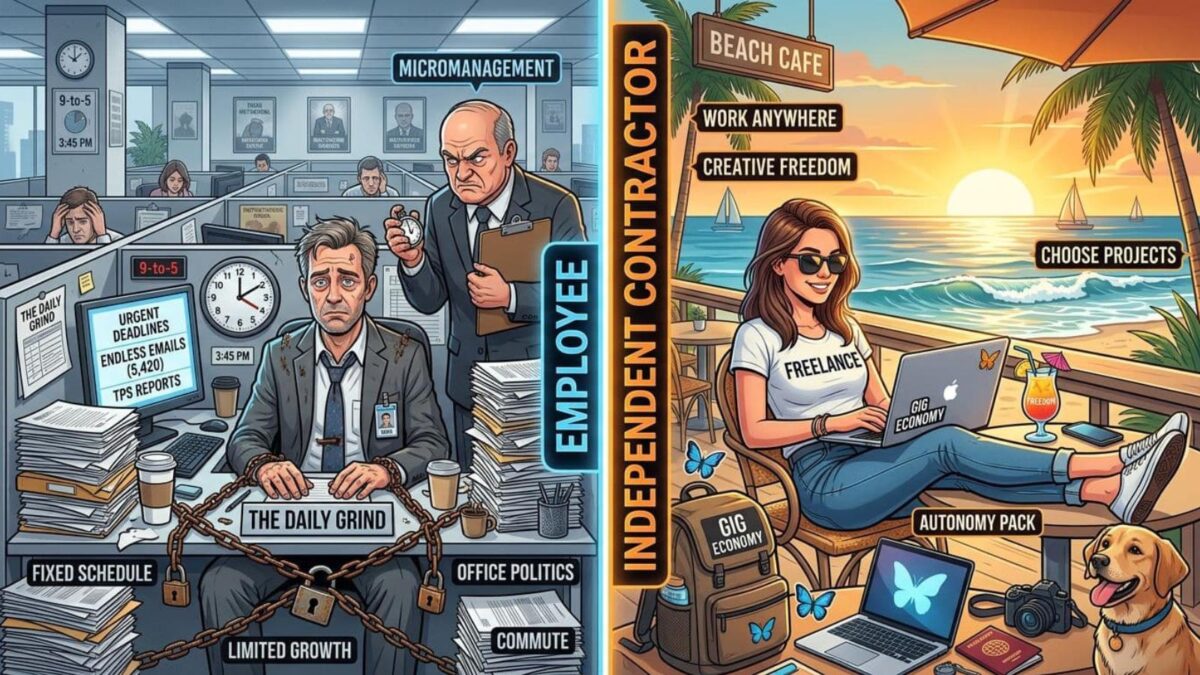
The question this post poses might be seen as immature by some, and those people would be correct. If you run a business, sooner or later, you have to talk to people who will, of course, be part of the general public in a macro sense.
You have to hire trusted staff, talk with investors, build with other businesses, serve customers, and move forward with a general liking for the people you spend so much time serving.
Odds are that if you dislike people in general, it will show in how you treat consumers, as well as in the products and services you provide to them.
That being said, anyone who has worked a retail or hospitality job will know that sometimes, the general public is simply unpleasant to deal with. They can be wonderful too, but that’s not always the case, even if you run a business today.
Table of Contents
Key Takeaways For Running a Business With Limited Public Contact
- You can run a business with limited public interaction, but you still need some people contact (staff, partners, investors, and customers).
- E-commerce platforms and fulfillment providers can handle storage, packing, and shipping, so you don’t have to.
- A virtual address helps you keep your home address private and manage mail without in-person drop-ins.
- FAQs, tutorials, and guides answer common questions upfront and reduce incoming support requests.
- AI chatbots and automation can cover basic customer service, lead capture, and simple sales tasks 24-7.
- Limiting public contact supports well-being and work-life balance, as long as your systems still serve customers well.
Running A Business
As such, you might be wondering whether it’s possible to run a business well without personally connecting with the general public and managing their concerns on a daily basis.
Well, luckily, there are a few measures you can use to limit your exposure, except when it counts. In this post, we’ll discuss how you can run a business with less contact with the public.
Use E-Commerce & E-Fulfillment Providers To Run A Business
You may be surprised by just how many excellent e-commerce providers (through online shop platforms) and e-fulfillment centers (that will store and deliver your products for a fee) that you can work with.
These can help you effectively outsource the delivery pipeline if you sell enough products, or they might help you shift volume without necessarily integrating your own logistics plan.
If you hope to enter new markets without a presence there, this can be a great place to start as you run a business.
Run A Virtual Address & Use Helpdesk Services
A virtual address can give you an added level of detachment if you run a business remotely or a home based business. This ensures that correspondence reaches you correctly when needed.
Investing in an appropriate help desk solution can also help you organize and categorize responses to customer or client complaints and queries, which has a positive impact and helps you avoid unnecessary interactions.
In addition, helpful tools like well-written tutorials, content, guides, and FAQ sections can help you answer many of the questions a customer might have before they even ask it.
Combined with web utilities like AI chatbots, only the most important correspondence will reach you.
AI Chatbots To The Rescue
Running a business without public interaction is a challenge, but it’s doable with the right tools and strategies. You’ll need to leverage technologies such as AI chatbots, online marketplaces, and automation to handle tasks across customer service, sales, and operations.

It’s crucial to have a robust online presence, optimized for search engines and social media. You should also focus on building an engaged email list and utilizing email marketing effectively.
Outsourcing certain tasks to freelancers or agencies can free up your time to concentrate on core business activities.
While it may seem daunting, with dedication and smart use of resources, you can successfully run a business without face-to-face public interaction.
Outsource Where Needed To Run A Business Efficiently
Of course, you can outsource various aspects of your business and move quite reliably from one month to the next as you run a business.
From having your payroll and accounting taken care of by a third-party service or even using comprehensive software to help you, to enlisting freelance copywriters and graphic designers, you may be surprised by how the vital tasks that need doing can remain within the professional economy.
You can do this without necessarily having to attend job fairs, network, or put yourself out there too much, since you run a business 24/7.
This can save those networking opportunities for when they matter most, such as when you have a product to announce or demonstrate at a trade show.
Conclusion: Learning How To Run A Business Without Public Interaction
With this insight, you’ll be able to answer the question posed by this article – while an isolationist approach will never help your business thrive, you can certainly set up internal systems to help you avoid reliving those retail days.
Permit yourself to prioritize your own well-being and work-life balance by reducing the demands of constant public engagement while running a business.
By leveraging technology and digital platforms, you can build a thriving business while maintaining privacy and personal space.
Frequently Asked Questions About Running a Business Without Public Interactions
What should you focus on first when you’re running a business day to day?
Start by getting clear on what keeps the lights on: cash flow, customers, and capacity. If you don’t know what money is coming in, when bills are due, and what work is already promised, everything else turns into guesswork.
Then, protect your time. Your calendar should reflect the business you’re trying to run, not just the fires you’re putting out. Block time for revenue work (sales, marketing, fulfillment) and admin work (billing, bookkeeping, vendor follow-ups). If you’re a one-person shop, this matters even more because nobody else is catching what you miss.
How do you build systems without turning your business into a pile of paperwork?
Keep your systems tied to real problems. If you keep forgetting to invoice, build an invoicing routine. If customers ghost after asking for pricing, tighten your follow-up process. A system should remove friction, not add it.
Write each workflow in plain language. A short checklist is enough. You’re aiming for repeatable, not perfect.
Also, decide where things live. Pick one place for customer info, one place for files, and one place for tasks. When your info is scattered, you waste time searching, and you miss details that affect service.
What are the biggest money mistakes small business owners make, and how can you avoid them?
The most common issue is mixing personal and business money. It makes taxes harder, hides real profit, and turns bookkeeping into a mess. Open a dedicated business bank account as soon as you can, then run all business income and expenses through it.
Another problem is pricing without doing the math. If you only price based on what competitors charge (or what feels fair), you can end up booked solid and still stressed about bills. Your pricing has to cover your costs, your time, and your profit. If you’re not sure what your costs are yet, track them for a month and adjust.
Late invoicing is another quiet killer. The longer you wait to bill, the longer you wait to get paid. Set a rule, like invoicing the same day you deliver, or invoicing every Friday, no exceptions.
Also, don’t ignore taxes. Even if you’re not sure what you’ll owe, start setting aside a percentage of your income. It’s easier to adjust a habit than to scramble later.
Last, watch for “death by subscriptions.” Small monthly charges add up fast. Review your recurring expenses regularly and cut what you don’t use.
How do you market consistently when you’re busy running the business?
Pick a marketing approach you can repeat, even during a packed week. Consistency beats intensity. Instead of trying to do everything, choose one primary channel (such as referrals, email, local networking, or a single social platform) and commit to a simple schedule.
Also, protect your reputation marketing. Ask for reviews when a client is happy, not months later. Keep a simple script you can copy and send, so you don’t overthink it
About The Author