Every company needs to pay close attention to the value of small business assets. The greater the effectiveness with which you can put your resources to use, the higher the likelihood that your company will generate a profit.
Nevertheless, effective asset management needs to be an integral component of any viable business plan. It is a good idea to look into asset management software.
However, when you’re running a successful business, it’s essential to keep security in mind. Criminals can target companies of all sizes, so implementing measures to keep the bad guys out is crucial to protecting your business assets.
What are business assets? Learn what they are and how to protect your small and even intangible business assets.
Table of Contents
Key Takeaways
- Business assets are anything of value owned by a company, including physical assets (such as equipment and vehicles) and intangible assets (such as patents and intellectual property).
- Asset management means tracking what you own, what it’s worth, how it’s used, and how its value changes over time.
- Good asset management helps you reduce waste, plan investments, handle depreciation and write-offs, and protect your company’s cash flow.
- Security measures such as CCTV, alarms, lighting, safes, uniforms and IDs, reception or security staff, and window shutters help protect physical business assets from theft and damage.
- Business insurance adds a financial safety net by covering property damage, lawsuits, and some losses, as long as you choose the right type and level of coverage.
What Are Assets In Business Exactly?
According to Investopedia, business assets are:
A business asset is an item of value owned by a company. Business assets span many categories. They can be physical, tangible goods, such as vehicles, real estate, computers, office furniture, and other fixtures, or intangible items, such as intellectual property.
Wikipedia
You can itemize your business assets that show value on your balance sheet. Your assets are listed at historical cost and in order of liquidity.
Most of these business assets are tax write-offs or used for depreciation – the process of spreading the cost of an asset over time.
Examples of Business Assets:
- Inventory
- Tools
- Equipment
- Office furniture
- Computers
- Vehicles you use for work
- Money owed to you, such as unpaid invoices from customers, and any savings or investment accounts in the business name.
- Website
- Email list
- Trademarks
- Domain name
- Social media accounts
- Your point-of-sale system
- Software subscriptions
- Customer database
Find Out What Your Company’s Assets Are
There are a variety of shapes that assets in a business can take. Most of the time, assets take the form of monetary value, but they can also take physical form.
Assets can be used in a company’s day-to-day operations, such as machinery or tools, or intended for sale to clients.
An asset is something that can be considered to have economic value.
Performing Calculations On Their Worth
The monetary value of an asset rarely remains constant over time. Share prices might change, interest rates seldom stay the same, and even physical objects will depreciate over time.
Because of this, if you want to maintain an accurate understanding of the value of your assets, you will need to monitor changes in that value over time while comparing them against several criteria.
It is even possible for the value of an asset to decrease, in which case you will need to be familiar with the proper procedures for selling or otherwise getting rid of the asset. This can take place if the asset loses its usefulness for some reason; for example, if it develops a problem.
There are circumstances in which the loss can be deducted from the taxable income.
In this situation, you will be required to provide information on the asset’s initial value and the extent to which its value has decreased over time.
Managing Assets
A crucial part of effective asset management is maintaining an accurate accounting of the asset’s current market value.
In the case of actual items, however, it also concerns how they are used and the physical location of the assets. This is relevant not just to how your assets are utilized but also to the rate at which your inventory is turned over.
The rate at which inventories are turned over is one of the most critical aspects of asset management. If you stay on top of your inventory, you will be able to determine which of your assets require investment and which have reached the point where they are draining your finances.
Investments are also a crucial factor in asset management. You need to be aware of the risks associated with any investments, whether in physical or financial assets.
When investing in physical assets, you should be aware of the potential for theft or damage resulting from natural disasters.
Financial Assets
When it comes to financial investments, you need to ensure they are diversified and adequately managed. It is also vital that you observe any tax laws associated with the type of investment you make. For example, you can use an ixic index to track asset performance.
Increasing the effectiveness of your assets is a primary focus of asset management. Any company might stand to benefit tremendously from doing this.
Asset management will enable you to improve your company’s core processes, maximizing the potential of each asset and delivering the highest return on your investment.
This means spending as little money as possible on assets that have become obsolete, as well as ensuring that assets are assigned and used efficiently to meet the corporation’s requirements.
CCTV and Alarms
CCTV and burglar alarms act as both deterrents and ways for criminals to be identified if they’re caught. You need high-quality, professionally fitted models.
Install these cameras and alarms properly so they work when you need them to protect your assets.
These days, smart burglar alarms send a notification to your phone when they go off while you’re not there, and you can view cameras in real time.
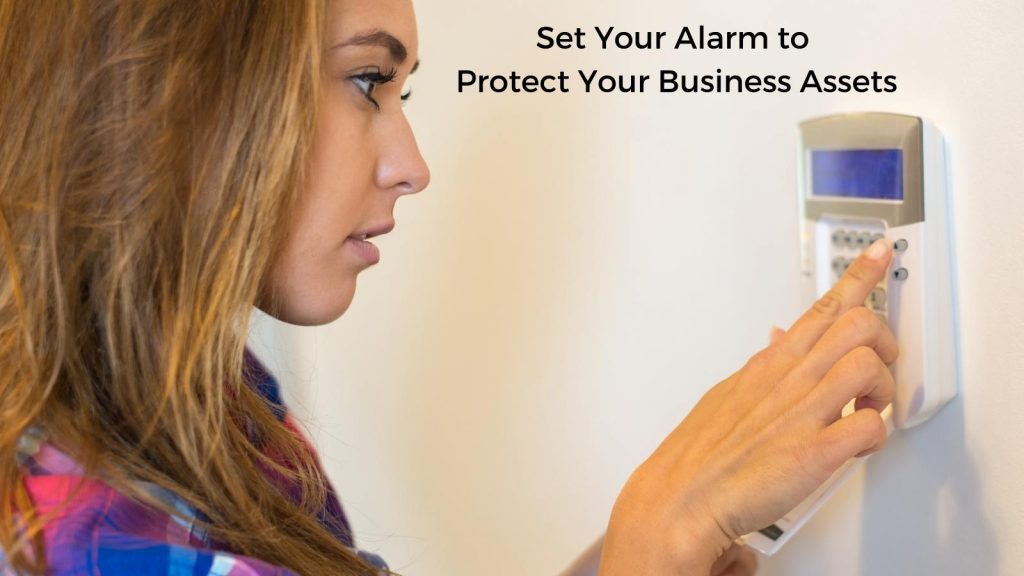
Security systems have certainly made big strides in recent years to protect your business assets.
Lighting to Protect Your Business Assets
Burglars like to operate under the cover of darkness. So installing exterior lighting on your premises deters most burglars. Make it easier for you and your security team to see the camera footage clearly when needed.
As with CCTV and alarms, make sure lighting is fitted high onto walls so it can’t be tampered with or have wires cut; set your motion detector lights to stay on for a number of minutes once they’ve been activated.
Safes to Protect Business Assets
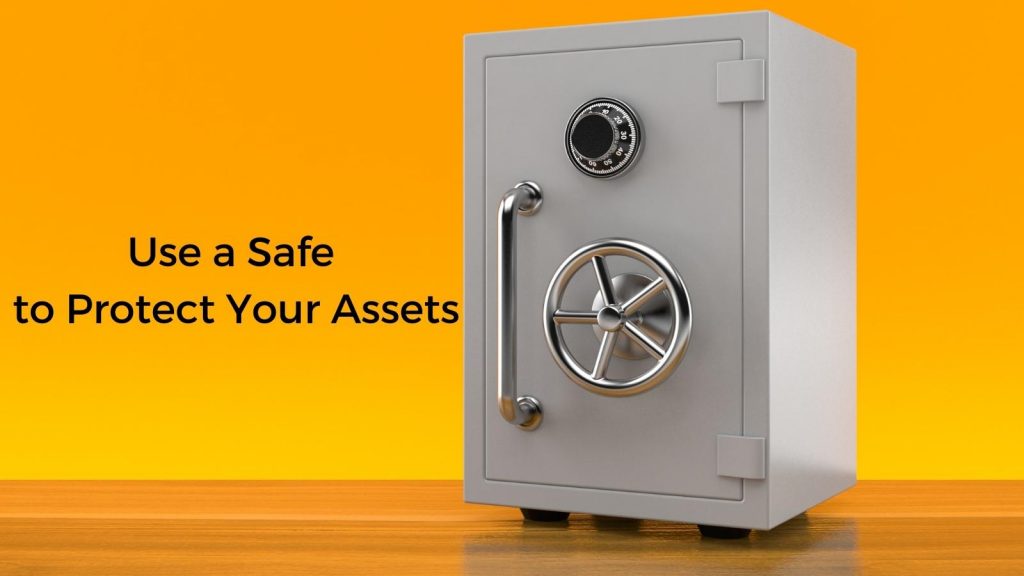
A secure safe, hidden away and bolted down, with any valuables and cash, is a deterrent. This will prevent a thief from simply walking off with it.
Collect cash regularly and put it away, so you don’t lose any if you’re robbed.
Uniform and ID
Uniforms help distinguish your employees, reducing security concerns. It prevents unauthorized people from entering your premises and operating in plain sight.
You could consider the use of lanyards to help with employee identification to ensure everyone is easily identifiable.
Recognizing visitors improves security for both employees and visitors. Pair the lanyard with photo ID or access cards for maximum benefit.
Reception/Security to Protect Your Business Assets
Depending on the type of business you’re running, you may want to add another layer of security to your premises than just access cards. This could be a receptionist who checks people in or security guards.
Techs like Motorola portable radios can make communication between guards easier if you have larger premises.

Window Shutters
Metal, lockable shutters that pull down over doors and windows are an effective way to keep criminals out. For a more subtle look than prison-style bars, pull your lattice grates over your windows and lock them at night.
Then pull them back in the daytime so they are not noticeable.
Protect your assets with shutters if you live in a high-crime area or leave your premises unattended for any length of time.
Insurance to Protect Your Business Assets
However, let’s not forget about business insurance to protect your assets. No matter how small your business is, you will need some form of business insurance.
Insurance can help pay the costs of property damage, lawsuits, lost business income, and other covered losses for your small business.
What is the cost of business insurance for most small businesses? On average, your company may pay between $300 and $1,000 annually for $1,000,000 of basic professional liability insurance. (According to Cover Wallet and my own business insurance coverage.)
Frequently Asked Questions About Business Assets And Asset Protection
What are business assets in simple terms?
Business assets are items of value that a company owns and uses to run or grow the business. They include physical items such as vehicles, real estate, equipment, computers, and office furniture, as well as intangible items such as patents, trademarks, and other intellectual property. These assets appear on the balance sheet, usually at historical cost and in order of liquidity.
How do you find out what your company’s assets are?
Start by listing everything your business owns that has economic value. Include items used in daily operations, such as machinery, tools, computers, inventory, and vehicles, as well as assets held for sale. Then add financial assets, such as cash, investments, and accounts receivable, plus intangible assets like patents or proprietary software. Use your balance sheet and fixed asset register to confirm and organize this list.
How do you calculate and track the value of your business assets over time?
Asset values change over time because share prices move, interest rates change, and physical items wear out or become outdated. To track value, record each asset’s purchase cost, useful life, and method of depreciation. Update your records regularly to reflect depreciation, write-downs, or disposals. When an asset loses usefulness or fails, you may be able to deduct the loss from taxable income, as long as you keep clear records of its original value and how much value was lost.
What is asset management, and why does it matter for small businesses?
Asset management is the process of tracking what you own, where it is, how it is used, and what it is worth. For small businesses, this helps you see which assets support revenue and which drain cash. It also enables you to plan when to repair, replace, or sell assets, manage inventory turnover, and balance risk for financial investments. Effective asset management can improve daily operations and increase the return on every asset.
How can a small business protect its physical assets from theft or damage?
You can protect physical assets by layering several security measures. CCTV and burglar alarms deter criminals and provide evidence if a crime occurs. Outdoor lighting reduces dark areas where burglars like to hide and improves the quality of camera footage. Safes protect cash and small valuables, especially when they are bolted down and emptied regularly. Uniforms and photo IDs help staff spot who belongs on site. Reception staff or security guards control access to the building, and window shutters or grates protect doors and windows when the premises are closed. Business insurance then helps cover some of the financial loss if damage or theft still occurs.
How does business insurance help protect assets?
Business insurance helps protect assets by covering part of the cost when things go wrong, such as property damage, lawsuits, or lost business income from covered events. For many small businesses, basic professional liability coverage in the range of 1,000,000 dollars often costs between 300 and 1,000 dollars per year, based on figures from providers like Cover Wallet. The right policy and coverage level help your business recover financially after a loss, rather than paying everything out of pocket.

I’m Lisa Sicard, founder of Inspire To Thrive.
Small Biz Tipster is my dedicated space for straightforward, no-nonsense tips that help small business owners grow smarter and faster. Voted in the Top 100 Small Business Blogs by Feedspot for 2025 and 2026, and with over 30 years of hands-on digital marketing experience, I share simple strategies here so you can save time on social media, attract more customers, and focus on what you love — running your business. Through Inspire To Thrive, I also provide social media management, training, and consultations.