
Q4 expenses can strain a healthy business when inventory purchases, payroll obligations, and tax deadlines coincide. A clear forecast prepared during the third quarter gives you time to adjust spending, collect outstanding invoices, and protect working capital.
Start with actual figures from the year to date, then build a month-by-month estimate for October through December. The result should show when cash enters the business, when major bills come due and how much of a reserve you’ll need.
Table of Contents
Anticipating Year-End Inventory and Payroll
Estimate inventory needs using prior-year sales, current orders and realistic demand forecasts. If holiday sales typically increase revenue by 20%, determine how much stock you need and when suppliers require payment.
Include shipping costs, storage fees and any deposits needed to secure high-demand products.
Payroll projections should cover regular wages, overtime, bonuses, commissions and employer taxes. Account for holiday schedules and extra staffing, too. A business expecting $30,000 in December payroll may need several thousand dollars more for seasonal hours and performance bonuses.
👉 A yearly business calendar can help you align these Q4 expenses alongside tax dates, contract renewals, and planned purchases.
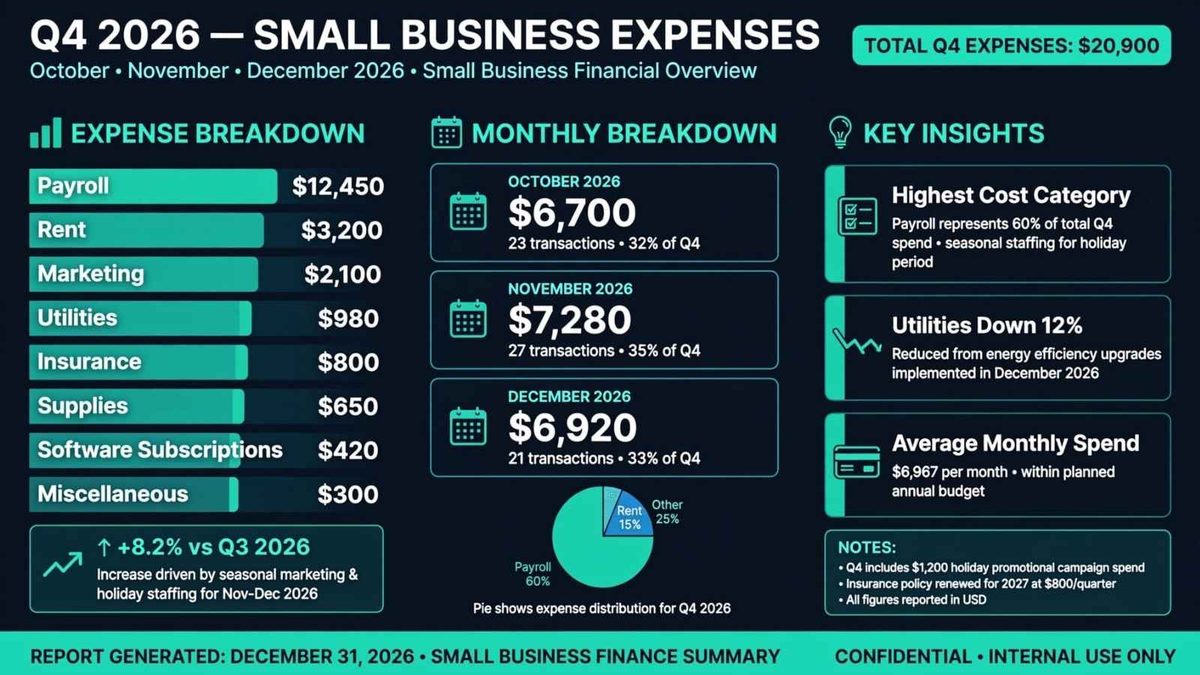
Identifying Hidden Cash Drains Early for Q4 Expenses
Review recurring expenses line by line before they roll over into the next billing cycle. Common cash flow leaks include:
- Unused software subscriptions.
- Duplicate services.
- Automatic renewals.
- Vendor charges that have increased without review.
Small costs add up quickly. Ten unnecessary subscriptions at $75 per month consume $9,000 over a year.
Examine accounts receivable at the same time. Late customer payments can create a shortage even when your income statement shows a profit.
Send invoices promptly, follow up before due dates, and resolve disputed charges early. I keep notes in my calendar of when to contact clients for reminders.
👉 Compare actual spending to your budget each week to catch rising costs before they affect payroll or supplier payments.
Actionable Measures Before Summer Ends
Use late summer to update financial records and turn your forecast into scheduled actions. Reconcile bank and credit accounts, categorize outstanding transactions, and confirm that customer balances are accurate.
Then review key steps to take before Q3 wraps up as you consider estimated taxes, equipment purchases, and retirement plan contributions.
Set specific deadlines for decisions that could affect year-end cash. For example, choose by August whether to replace a failing computer system, then obtain quotes before September.
Contact slow-paying customers early and ask vendors about payment terms before placing large orders.
👉 Keeping these tasks within the third quarter preserves more options if revenue falls short of expectations.
Consulting Advisory Experts on Deductions
Schedule a tax planning discussion while there’s still time to act on the advice.
- Bring current financial statements.
- Prior tax returns.
- Payroll records.
- A list of planned purchases.
I’ve already had to do this last week as my medical insurance is based on income. I use an Excel spreadsheet to keep track day by day.
Ask how timing affects deductible expenses, estimated payments, and the tax treatment of equipment or employee benefits. Tax rules vary by business structure and circumstances, so avoid assuming that an expense qualifies based on general online guidance.
Advisory support can also improve year-end cash flow management. An accountant or financial adviser may identify mismatches between payment dates and expected receipts, then help model different scenarios.
👉 Get any recommended deadlines and documentation requirements in writing so your staff can complete each task correctly.
Entering the Final Q4 Expenses with Confidence
Turn your forecast into a working dashboard that you review every week. Track the opening cash balance, expected receipts, required payments, and projected closing balance for each remaining week of the year.
Add a conservative scenario that assumes slower collections or lower sales. If that version shows a shortfall in November, you’ll know how much to delay spending or reserve in cash.
Assign one person to update the forecast and flag material differences. A 10% variance, for example, might trigger a review of inventory orders or discretionary expenses. Before October begins, confirm payroll totals, supplier commitments, and tax deadlines against available funds.
👉 That final check gives your team a specific operating plan for the quarter, rather than relying on year-end estimates that may already be outdated.
Conclusion: Q4 Expenses Mastered
Q4 doesn’t have to catch you off guard. The businesses that move through the final quarter with less stress are the ones that treated their cash-flow forecast as a living document, not a one-time exercise. By mapping out inventory needs, payroll spikes, tax deadlines, and hidden expenses while you still have time to act, you give yourself room to adjust rather than react.
Start with what you already know from the year so far. Update the numbers weekly. Flag the weeks where cash looks tight and decide in advance what you’ll delay, collect, or protect. A clear picture of your money, paired with timely conversations with your accountant, turns year-end pressure into a manageable plan.
You don’t need perfect numbers. You need enough clarity to make better decisions before the calendar forces them. Review your forecast this week, lock in the next few action items, and enter the rest of the quarter knowing where your cash stands.
Frequently Asked Questions
When is the best time to build a Q4 cash-flow forecast?
Ideally during the third quarter, so you still have time to adjust orders, chase invoices, and make tax-related decisions. If you’re already in Q4, start with the remaining weeks and update it weekly—late is still better than not at all.
What should I include in a basic Q4 forecast?
Month-by-month (or week-by-week) estimates of cash coming in, major bills going out, inventory and payroll costs, tax payments, and a reserve for surprises. Include both your expected scenario and a more conservative one that assumes slower collections or lower sales.
How do I catch hidden cash drains before they add up?
Review recurring subscriptions, vendor contracts, and automatic renewals line by line. Cancel or renegotiate anything unused. At the same time, look at accounts receivable and follow up on late invoices before they create a cash shortage.
Do I really need to talk to an accountant before year-end?
Yes, if you want to make smart timing decisions on deductions, estimated taxes, equipment purchases, or retirement contributions. Bring current financials, prior returns, and a list of planned expenses so the advice is specific to your situation.
What if my Q4 Expenses forecast shows a shortfall?
Use it as an early warning. You can delay non-essential spending, speed up collections, negotiate payment terms with suppliers, or set aside cash now. Knowing the gap in advance gives you options you won’t have if you wait until the bills are due.
Disclosure: This Small Biz Tipster blog post may contain affiliate links. I may earn a commission from qualifying purchases at no extra cost to you. Some sections were drafted with AI tools and carefully reviewed/edited by me.

I’m Lisa Sicard, founder of Inspire To Thrive.
Small Biz Tipster is my dedicated space for straightforward, no-nonsense tips that help small business owners grow smarter and faster. Voted in the Top 100 Small Business Blogs by Feedspot for 2025 and 2026, and with over 30 years of hands-on digital marketing experience, I share simple strategies here so you can save time on social media, attract more customers, and focus on what you love — running your business. Through Inspire To Thrive, I also provide social media management, training, and consultations.