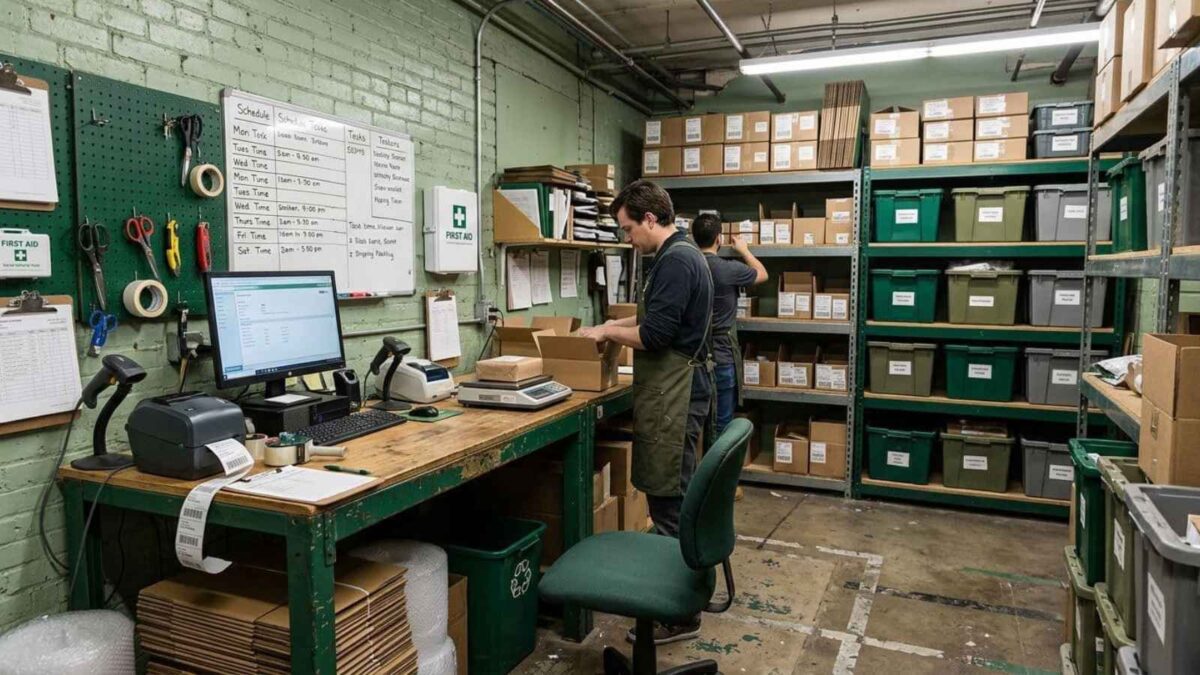
Small delays often reveal where workplace logistics are costing a business more than expected. Employees may spend several minutes locating workwear, supervisors may chase missing supplies, and purchasing teams may reorder items that are already on-site.
These interruptions may seem minor when viewed individually, but they add up across departments and shifts. A clear review of how people, garments, and supplies move through the workplace can uncover practical opportunities to save time, improve accountability, and reduce avoidable spending.
Table of Contents
Enhancing Workplace Logistics for Efficiency
Start by following a common task from beginning to end. Record every handoff, approval, and waiting period involved, then ask employees where delays most often occur. A maintenance worker waiting for protective clothing or a supervisor searching for a delivery can reveal a process issue that reports miss.
Guidance on operational bottlenecks highlights the value of examining workflows across teams; one department’s delay can constrain another’s capacity. Look for repeated data entry, unclear storage locations, and tasks that depend on one person being available.
Poor records can hide these patterns. The hidden costs of poor data governance include duplicated work and unreliable reporting, so assign clear ownership for operational data and use consistent labels across systems.
Modernize Workwear Distribution Systems
Workwear distribution can consume valuable shift time when employees collect garments from a staffed counter or search through shared storage. Review how clean clothing reaches each employee, how used items are returned, and how missing garments are reported.
A managed system with laundered garment lockers can deliver clean items to individual employees’ lockers while providing a separate collection point for soiled clothing. This arrangement may suit businesses that issue workwear regularly and want to reduce garment misplacement without maintaining a staffed cloakroom.
Before changing the process, map employee numbers, garment allocations and shift patterns. Check locker access requirements and plan for new starters, size changes and replacement items.
A short trial in one department can expose practical issues before a wider rollout of workplace logistics.
Automate Everyday Inventory Tracking
Inventory tracking should show what is available, where it’s stored, and when it needs to be replenished. Begin with:
- Frequently used items such as cleaning supplies.
- Packaging materials.
- Personal protective equipment.
Give each item a standard name, stock code, storage location, and reorder level. Barcode scanners or mobile inventory apps can record withdrawals as they happen.
For example, if a storeroom starts with 100 filter cartridges and staff scan 15 during a shift, the system should show 85 without requiring a manual count. Low-stock alerts can then notify the responsible employee before supplies run out.
Common fixes for logistical operations include improving visibility and standardizing processes. Keep the system manageable by tracking items that affect operations first, then add lower-priority stock once employees use the process consistently.
Measure Time Saved Across Shifts
Measure the original process before making changes. Record how long employees spend collecting workwear, finding stock, and reporting shortages over several typical shifts. Exclude unusual events, such as a delayed delivery, unless they happen often enough to represent a recurring problem.
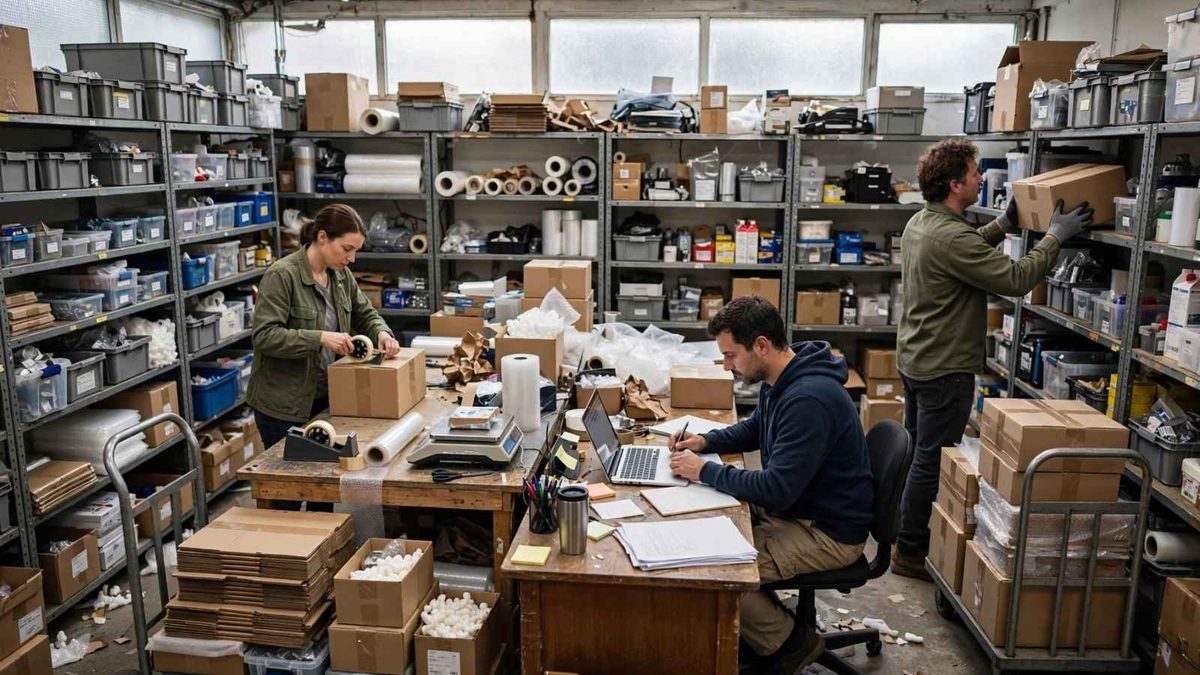
After introducing the new process, repeat the measurement under similar conditions. If 30 employees each save four minutes at the start of a shift, the business recovers two hours of working time per shift.
Track related measures too, including missing garment reports, emergency orders, and supervisor interventions.
Share results in a simple monthly dashboard. Include the baseline, current result, and financial effect where possible. This helps managers distinguish genuine improvements from changes that have merely moved work to another team.
Conclusion: Improving Workplace Logistics
The strongest logistics improvements become visible in ordinary routines: employees find what they need, stock records match the storeroom, and shift handovers require fewer explanations. Keep reviewing those routines after implementation of your workplace logistics because staffing levels, schedules, and supply needs will continue to change.
Disclosure: This Small Biz Tipster blog post may contain affiliate links. I may earn a commission from qualifying purchases at no extra cost to you. Some sections were drafted with AI tools and carefully reviewed/edited by me.

I’m Lisa Sicard, founder of Inspire To Thrive.
Small Biz Tipster is my dedicated space for straightforward, no-nonsense tips that help small business owners grow smarter and faster. Voted in the Top 100 Small Business Blogs by Feedspot for 2025 and 2026, and with over 30 years of hands-on digital marketing experience, I share simple strategies here so you can save time on social media, attract more customers, and focus on what you love — running your business. Through Inspire To Thrive, I also provide social media management, training, and consultations.