
Every outbound link your business shares carries a small but meaningful trust decision. Utilizing URL shorteners for small businesses can enhance link clarity and improve customer trust.
Customers scan the domain, wording, and surrounding message before they click, especially when a link arrives through email or text. A clear destination can support your credibility, while an unfamiliar string of characters may cause hesitation.
Small businesses need link practices that protect customers, preserve brand recognition, and provide useful performance data without adding friction to routine communications.
Table of Contents
The Modern Phishing Dilemma
Fraudulent messages often imitate delivery notices, account alerts, and promotional offers. As a result, customers have learned to treat unexpected links with caution. That skepticism can affect legitimate appointment reminders, invoices, and product updates too.
Before sending a campaign, inspect each link from the customer’s perspective. Confirm that the surrounding message identifies your business, explains the destination, and gives the recipient a reason to click. If you’re evaluating a URL shortener, compare options based on branded links, tracking, QR code generation, and centralized management. Avoid generic-looking links that provide no clue about where the customer will land.
How Visual Branding Signals Safety
Consistent visual details help people recognize legitimate communications. Your logo, colors, sender name, and linked domain should align across your website, email templates, and customer portal. These digital trust signals give recipients familiar reference points before they interact with a message.
Imagine that a customer receives a payment reminder with your usual logo but an unrelated link domain. Even if the message is genuine, the mismatch can appear suspicious.
Use branded link text where possible and place links inside clear sentences. Your landing page should continue the same visual style, include current contact information, and explain what the visitor needs to do next.
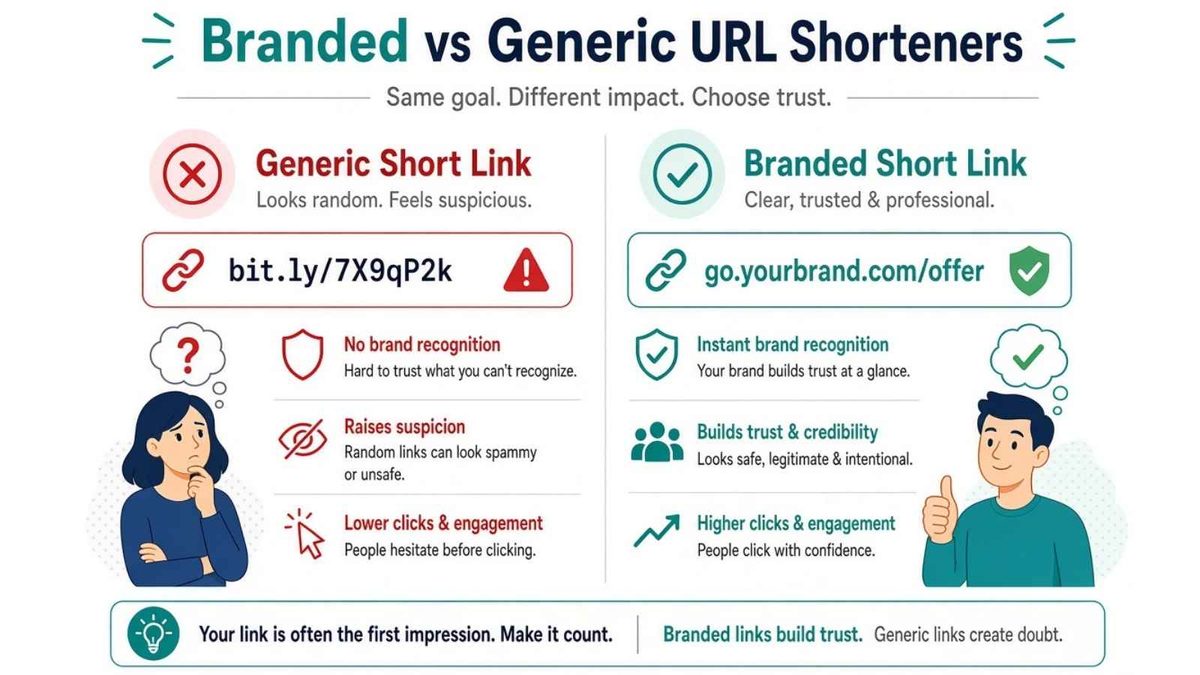
👉 Branded links are one of the most effective ways URL shorteners for small businesses can reinforce recognition and reduce customer hesitation.
Selecting an Enterprise URL Shortener for Small Businesses
The right URL shorteners for small businesses prioritize custom domains, clear branding, and strong controls.
Choose a link platform based on control, reporting, and usability across your organization. Custom domains should be a priority because they allow customers to associate each shortened address with your business. Detailed analytics can then show click volume, location patterns, devices, and campaign performance.
Look for permission settings that separate administrators from campaign users. This prevents accidental edits and helps larger teams maintain consistent naming conventions. You’ll also want expiration controls, redirect editing, and an export option for reporting. Review how the service handles account access and data retention before adoption.
If several departments share links, create a brief written policy that covers link names, ownership, and approved destinations.
Auditing Your Customer Touchpoints
List every place where customers encounter a link, including receipts, support messages, social profiles, QR codes, and automated reminders. Test each one on both desktop and mobile. Confirm:
- That redirects work.
- Pages load securely.
- The destination matches the promise made in the message.
A quarterly audit can catch expired campaigns, outdated domains, and links assigned to former employees. The broader customer safety guidance also helps businesses examine how communication choices affect trust. Keep a central record of the original destination, the shortened address, the owner, and the review date.
Website credibility deserves the same attention. Clear contact details, customer reviews, and recognizable branding are common local business trust signals. When your next campaign is ready, click every link in a test message before it reaches a customer’s inbox.
URL Shorteners for Small Businesses: The Bottom Line
URL shorteners for small businesses work best when they strengthen trust rather than risk it. Customers decide whether to click based on familiar signals: your brand name, clear messaging, and a destination that matches what you promised.
Generic short links can create hesitation because they hide the destination and are frequently used in phishing. Branded links, a consistent visual identity, and regular audits remove that friction while still providing you with useful click data.
Treat every outbound link as a small trust decision. Choose a platform that supports custom domains, set clear ownership rules for your team, and review your customer touchpoints quarterly.
👉 When your links look and feel like the rest of your business, people are more likely to click with confidence.
Disclosure: This Small Biz Tipster blog post may contain affiliate links. I may earn a commission from qualifying purchases at no extra cost to you. Some sections were drafted with AI tools and carefully reviewed/edited by me.

I’m Lisa Sicard, founder of Inspire To Thrive.
Small Biz Tipster is my dedicated space for straightforward, no-nonsense tips that help small business owners grow smarter and faster. Voted in the Top 100 Small Business Blogs by Feedspot for 2025 and 2026, and with over 30 years of hands-on digital marketing experience, I share simple strategies here so you can save time on social media, attract more customers, and focus on what you love — running your business. Through Inspire To Thrive, I also provide social media management, training, and consultations.