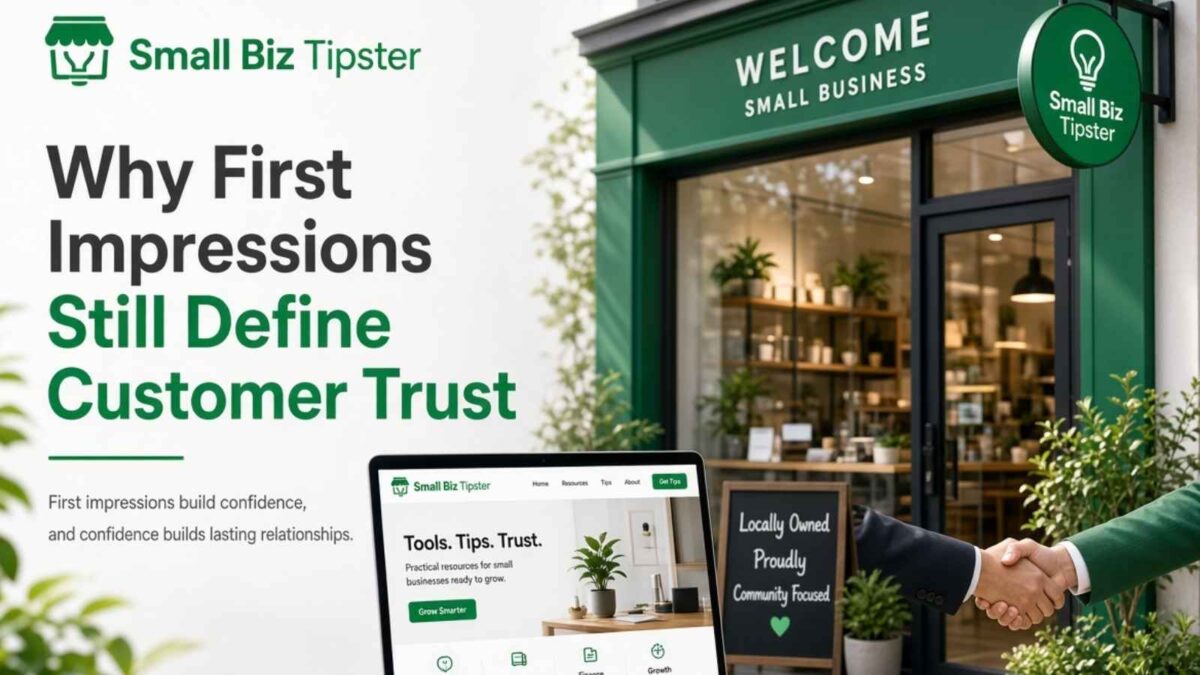
Strong first impressions customer trust signals help people decide whether a business is worth their time and money before they ever speak with an employee. A quick website visit, the condition of an entrance, and the cleanliness of customer-facing areas all shape that judgment.
A strong first impression won’t replace good service, but it can encourage someone to book an appointment, enter a store or request a quote. Small business owners can strengthen first impressions and customer trust by examining each early customer touchpoint and correcting anything that creates doubt.
Establishing a connection between initial perceptions and first impressions customers trust can lead to lasting relationships.
Table of Contents
First Impressions and Customer Trust for Small Businesses
Digital Credibility Starts Early – The Impact of First Impressions on Customer Trust
A polished website and current photos strengthen first impressions customer trust before someone ever walks through your door.
Clear service descriptions, current contact details and recent photos give visitors enough information to take the next step. Research on digital first impressions also shows why visual presentation can affect buying decisions early in the process.
Check your main website pages on a phone and a computer. (I always find errors on my phone after publishing a new post or page.)
Confirm that buttons work, forms are short, and business hours match across listings. Remove old promotions and replace blurry images.
➡️ A customer should understand what you provide, where you operate, and how to contact you within a few moments.
Curb Appeal Builds Immediate Confidence
The view from the parking lot or sidewalk sets expectations for what customers will find inside. Faded signs, overflowing bins and cloudy glass may suggest inconsistent maintenance, even when the underlying service is excellent. Start with the entrance because every visitor sees it.
Clean glass brings in more natural light and gives storefronts, offices and other commercial properties a cared-for appearance. If dirt, mineral marks or upper-floor access makes routine upkeep difficult, a professional window cleaning service can clean interior and exterior glass while addressing frames and sills.
➡️ Owners should also inspect lighting, door hardware and signs each week so small problems don’t become part of the customer experience.

Cleanliness Influences Review Scores as First Impressions Customers Trust
Customers frequently mention cleanliness when reviewing restaurants, salons, offices and retail businesses. They may not see your maintenance schedule, but they notice fingerprints on doors, dust near checkout areas and neglected restrooms. Those observations can affect the score they leave and the details other prospects read.
Review common contact points at opening, midday and closing. Assign responsibility for glass doors, counters, seating, and restrooms rather than relying on someone to notice a problem. Comments also reveal patterns that routine inspections miss.
Treating customer reviews as market research can help you identify repeated concerns, such as dim entry lighting or an untidy waiting area, and prioritize fixes with the greatest customer impact.
Small Details Signal Reliability
Consistent details such as accurate hours, a tidy entrance, and prompt replies all reinforce first impressions customer trust. Trust often grows from several consistent details. An accurate appointment reminder, a clearly marked entrance, and an employee who greets customers promptly all suggest that the business follows through.
Guidance on creating memorable first impressions reinforces the value of presentation and attentive communication.
Walk through the customer experience as if you were visiting for the first time:
- Call the listed phone number.
- Submit the contact form.
- Approach the entrance from the parking area.
Note anything confusing, damaged, or outdated. Then set clear standards, such as responding to inquiries within 1 business day and checking the entrance before opening.
➡️ Consistent routines keep minor lapses from weakening an otherwise reliable operation.
Conclusion: Why First Impressions Customer Trust Matters for Small Businesses
Customer trust begins with visible evidence. A current website, a clean entrance, and a prompt reply each support the same message: this business pays attention. Schedule a monthly walk-through and document what customers encounter from their first search result to their first few minutes on-site.
That record makes it easier to catch gradual wear, outdated information, and recurring maintenance needs before customers publicly mention them.
When every early touchpoint supports first impressions customer trust, customers are more likely to book, buy, or return.
FAQS
How quickly do customers form a first impression of a small business?
Most people form an initial judgment in seconds—often before they speak with anyone. A website, storefront, or Google Business Profile can create that impression long before a conversation starts.
Does a strong first impression replace good service?
No. It mainly determines whether someone is willing to book, walk in, or request a quote. Consistent service and follow-through are still what turn that initial trust into loyalty.
What should I check first on my website to improve trust?
Confirm that service descriptions are clear, contact details and hours are current, photos are recent, and key pages work well on both phone and desktop. Remove outdated promotions and blurry images.
How does cleanliness affect customer trust and reviews?
Customers frequently mention cleanliness in reviews for restaurants, salons, offices, and retail businesses. Fingerprints on doors, dusty counters, or neglected restrooms can lower scores even when the core service is strong.
What’s one simple routine that strengthens first impressions?
Do a short monthly walk-through from the customer’s perspective—starting with the search result or website, then the entrance, and finally the first few minutes on-site. Note anything confusing, damaged, or outdated and assign clear ownership for fixes.
Disclosure: This Small Biz Tipster blog post may contain affiliate links. I may earn a commission from qualifying purchases at no extra cost to you. Some sections were drafted with AI tools and carefully reviewed/edited by me.

I’m Lisa Sicard, founder of Inspire To Thrive.
Small Biz Tipster is my dedicated space for straightforward, no-nonsense tips that help small business owners grow smarter and faster. Voted in the Top 100 Small Business Blogs by Feedspot for 2025 and 2026, and with over 30 years of hands-on digital marketing experience, I share simple strategies here so you can save time on social media, attract more customers, and focus on what you love — running your business. Through Inspire To Thrive, I also provide social media management, training, and consultations.