
A beauty business faces legal obligations at nearly every customer touchpoint, from online booking forms to recurring memberships. A missed consent record or unclear cancellation policy can lead to disputes, payment reversals, and regulatory complaints.
Requirements vary by location and service type, so no general article replaces advice from a qualified attorney. Still, a clear compliance routine can help you spot common gaps before they become expensive problems.
A useful review should cover the beauty business information you collect, the credentials you maintain, the payments you process, and the promises you make to clients. Those four areas reveal many of the legal risks hidden in daily operations.
Table of Contents
Online Consent Policies Matter
Online booking makes appointments easier for a beauty business, but it also creates records that may contain names, phone numbers, email addresses, and details about requested services. Your privacy policy should explain what you collect, why you need it, how long you keep it and which service providers receive it. General online business legal considerations also include website terms, intellectual property and rules for online sales.
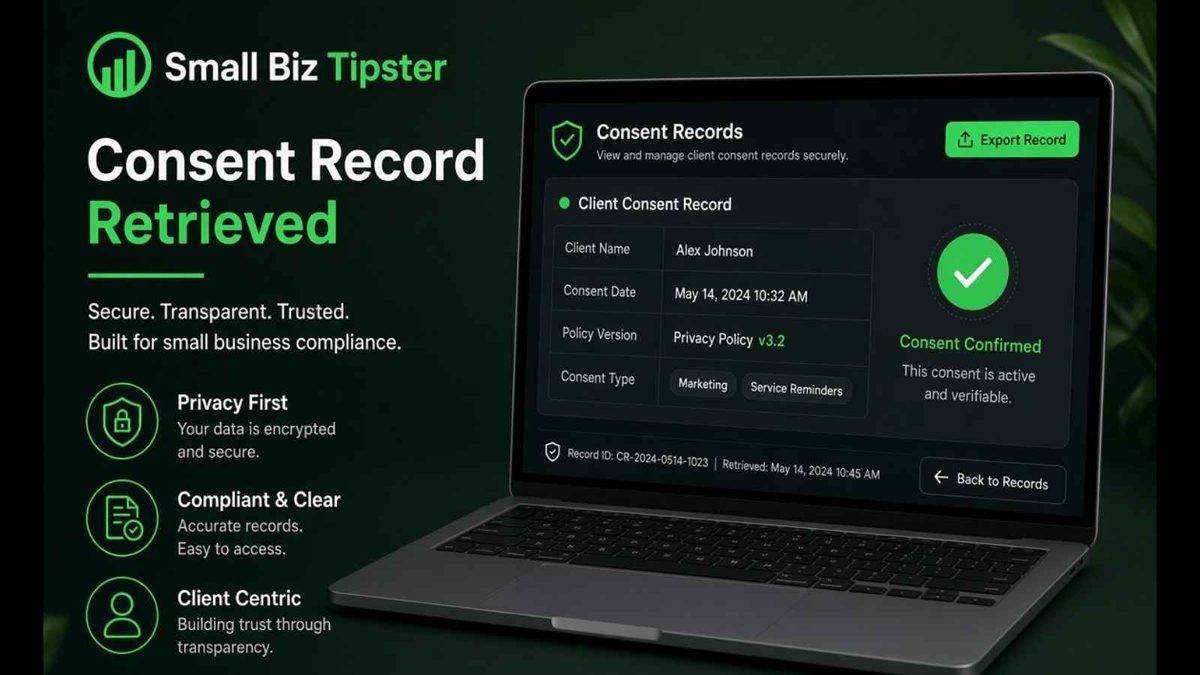
Consent needs to be specific. A checkbox accepting appointment policies shouldn’t automatically enroll someone in promotional emails. Use separate choices for marketing, service reminders, and any optional use of client photos. Leave optional boxes unchecked, record the date and wording shown when consent was given, and provide a simple way to withdraw permission.
Businesses serving customers in multiple jurisdictions may need to account for different privacy standards. Guidance on cookie consent renewal illustrates why website consent shouldn’t be treated as permanent. Your site may need to request consent again when preferences expire or when your data practices change.
Review your booking system from a customer’s perspective. Confirm that links to privacy terms work on mobile devices and that customers can read the terms before submitting their information. Then check the administrative side. You should be able to retrieve a consent record connected to a particular client, date, and policy version if a complaint arises months later.
Staying Ahead of Mandatory Renewals
Professional license and education deadlines can interrupt operations if they’re tracked only through memory or last-minute email notices. Create a renewal calendar that lists:
- Each license.
- Registration.
- Permit.
- Required training item associated with the business.
Include the deadline, responsible person, fee, supporting documents, and expected processing time.
Set reminders 90, 60, and 30 days before each due date. The first reminder gives you time to identify required coursework. The second should trigger a document review, while the final alert confirms that the application was submitted and accepted.
👉 Keep completion certificates and payment receipts in a folder organized by renewal cycle.
Beauty Business Location
Requirements differ by profession and jurisdiction. For example, Texas professionals seeking continuing education can review a TDLR cosmetology course option as part of their renewal preparation. Each owner still needs to verify current agency requirements, approved subject matter, and deadlines before enrolling.
Assign a backup person to monitor the calendar when possible. A salon manager might track staff deadlines while the owner reviews the record monthly. Independent professionals can use a dedicated digital calendar and save agency correspondence in a labeled email folder.
After submitting a renewal, don’t stop at the payment screen. Download the confirmation and check the official record once processing is complete.
👉 A receipt proves that money changed hands, but it may not prove that an application was complete or a credential became active.
Handling Digital Payment Records for Beauty Business
A beauty business may accept card payments, mobile wallet transactions, online deposits, and recurring membership charges. Each method creates records that must match your booking system and accounting reports.
Establish a schedule to reconcile payments at least weekly, and investigate any differences while staff members still remember the transactions.
Keep invoices, refund confirmations, and processor reports in accordance with your accountant’s advice and applicable recordkeeping rules. Access should be limited to people who need the information for their jobs.
Avoid downloading full payment reports to personal devices or sending sensitive customer details through ordinary email. Your payment processor should handle card data securely, leaving your business with only the records needed for bookkeeping and dispute management.
Beauty Business Recurring Charges
Recurring charges require extra care. Auto-renewal compliance rules can affect how businesses disclose renewal terms, collect agreement, and provide cancellation methods. If you sell a monthly service plan, show the amount, billing frequency, and cancellation process before checkout. Save evidence that the customer accepted those terms.
Run a test transaction whenever you change booking software or payment settings. Confirm that the receipt displays the business name, service, amount, and refund terms correctly. Then test a refund to see how long it takes and what the customer receives.
Chargebacks often begin with simple confusion. A recognizable billing descriptor, prompt receipt, and clear record of appointment attendance can make a transaction easier for the customer to identify and for you to document.
Creating Transparent Service Terms
Clear service terms help customers understand what they’re buying before they reserve an appointment. Place key conditions near the booking button instead of hiding them in a long policy page. Customers should see the price or pricing method, the deposit amount, the cancellation window, and the consequences of arriving late.
Write policies in plain language. For example, “Appointments canceled less than 24 hours before the start time may lose the $30 deposit” gives the customer a specific deadline and financial result. A vague statement about possible fees gives staff too much room for inconsistent decisions.
Memberships and packages need more detail. State the number of included services, expiration date, rollover rules, and process for ending recurring charges. Legal commentary on subscription practice reviews highlights concerns such as unclear disclosures and difficult cancellation procedures.
👉 Customers should be able to cancel through a reasonable method that’s easy to locate. That’s the reason I recently switched hairdressers.
Employee Training
Train employees to explain the written policy without improvising new promises. If one receptionist says deposits are refundable while another says they’re not, the written terms won’t prevent conflict. Give staff a short reference sheet for common situations and require manager approval for exceptions.
Review terms whenever you add a service, introduce a membership or change booking platforms. Save dated copies, so you know which version applied to a particular purchase. Ask a local attorney to review policies involving health disclosures, minors, recurring billing or significant nonrefundable payments.
A good compliance file should let you reconstruct what happened without relying on anyone’s memory. For a single appointment, you should be able to find the accepted terms, consent record, payment receipt, and any cancellation or refund communication. If those records are scattered across personal inboxes and paper notes, centralizing them is the most practical place to begin.
Schedule a policy review at least once a year and whenever a law, service, or software system changes. The strongest result is simple: customers see the same clear rules online, on their receipts and in conversations with your staff.
Frequently Asked Questions
Do I need a privacy policy if most clients book in person or by phone?
Yes. You still collect names, contact details, and service information. A clear privacy policy covers how you collect, use, store, and share that data, whether it comes from an online form, paper intake sheet, or appointment book.
How long should I keep consent and payment records?
Follow your accountant’s advice and any state recordkeeping rules. At minimum, keep consent records, booking terms, payment receipts, and refund notes long enough to handle a dispute or complaint that surfaces months later. Store them in a centralized, secure system rather than personal inboxes.
What should a cancellation and deposit policy include?
State the deadline, the exact amount (or method) of any fee or deposit forfeiture, and how clients can cancel. Example: “Cancellations less than 24 hours before the appointment may forfeit the $30 deposit.” Place the key terms near the booking button, not only in a long policy page.
Are monthly memberships or packages treated differently?
Often yes. Auto-renewal rules in many places require clear disclosure of the price, billing frequency, and an easy cancellation method before the client agrees. Keep a record of that acceptance and test the cancellation path yourself.
Can I rely on my booking software’s built-in policies?
The software can help, but you remain responsible. Confirm that the terms shown to clients match what your staff actually enforces, that consent records are retrievable, and that refunds and billing descriptors are clear. Run a test transaction after any software change.
Who should review these policies?
A qualified attorney familiar with your state and the types of services you offer, especially if you work with minors, collect health-related information, use nonrefundable payments, or sell memberships. Review at least annually or whenever you add a new service or platform.
Quick Compliance Snapshot for Beauty Business
Use this short check before you close the laptop:
- ☐ Consent records are retrievable — You can pull the exact consent (wording + date) for a specific client if asked.
- ☐ Renewals are calendared — Every license, registration, and required training has a 90/60/30-day reminder with a backup person.
- ☐ Payments are reconciled weekly — Card, deposit, and membership charges match your booking system and accounting records.
- ☐ Service terms are visible and consistent — Cancellation, deposit, and membership rules appear near the booking button and staff apply them the same way.
Start with whichever box is unchecked. One clear fix is better than a perfect system you never finish.
Conclusion: The Business of the Beauty Business
Focus on four areas: client information and consent records, credential renewals, payment and recurring-charge practices, and clear service terms. Start with a practical audit of these systems, document the gaps, and fix the highest-risk issues first.
Requirements vary by location and service type, so review policies with a qualified attorney at least once a year or whenever you add offerings, memberships, or software.
👉 The goal is consistency; clients should see the same clear rules online, on receipts, and from your staff, so you can reconstruct what happened without relying on memory.
Start with one area this week: consent records, your renewal calendar, payment reconciliation, or service terms, and document what you find.
Disclosure: This Small Biz Tipster blog post may contain affiliate links. I may earn a commission from qualifying purchases at no extra cost to you. Some sections were drafted with AI tools and carefully reviewed/edited by me.

I’m Lisa Sicard, founder of Inspire To Thrive.
Small Biz Tipster is my dedicated space for straightforward, no-nonsense tips that help small business owners grow smarter and faster. Voted in the Top 100 Small Business Blogs by Feedspot for 2025 and 2026, and with over 30 years of hands-on digital marketing experience, I share simple strategies here so you can save time on social media, attract more customers, and focus on what you love — running your business. Through Inspire To Thrive, I also provide social media management, training, and consultations.