
Poor facility upkeep may appear harmless on a monthly expense report, yet deferred maintenance can turn a manageable issue into a major financial setback. Water intrusion, equipment strain, and disrupted work schedules all entail costs that may not become apparent until damage has spread. Implementing a strategy for preventative building maintenance can mitigate these risks.
A consistent inspection and repair plan, part of a comprehensive approach to preventative building maintenance, helps you control those expenses while protecting employees, customers, and tenants. It also gives you clearer information for budgeting, insurance documentation, and long-term property decisions.
Table of Contents
Small Leaks Create Massive Repair Invoices
A small roof leak may only stain one ceiling tile at first. Left unresolved, moisture can soak insulation, damage drywall and flooring, and create conditions for mold. What began as a minor repair can then require interior demolition, material replacement, and professional cleanup. These hidden maintenance costs explain why waiting for obvious damage is usually expensive.
Record the location and date of every leak, then promptly arrange an inspection. A qualified roofing company can assess the roof’s condition, recommend necessary repairs, and help you plan for future maintenance. Photos, inspection reports, and completed work orders also create a useful history for future decisions.
The Domino Effect on Daily Operations
By prioritizing preventative building maintenance, businesses can avoid many common pitfalls and protect their investments.
Facility damage rarely stays confined to one part of a building. A leak above a retail checkout area may force staff to close registers and redirect customers. Water near office equipment could interrupt network access, while a damaged ceiling in an apartment complex may require temporary tenant accommodations. This highlights the importance of preventative building maintenance in ensuring smooth operations.
Calculate the operational impact when you review a repair estimate. Include employee downtime, canceled appointments, damaged stock, and any temporary space you’ll need.
Schedule noisy or disruptive work outside peak hours when possible and tell affected people what to expect. Keep a basic response plan that identifies who can authorize emergency work, shut down affected areas, and contact vendors. Clear responsibilities shorten delays when every hour of downtime has a cost.
Why Insurance May Deny Maintenance Claims
Property insurance generally covers sudden events defined in the policy, but it may exclude deterioration, neglected maintenance, or damage that developed over time. If an adjuster finds old staining, repeated leaks, or missing inspection records, the insurer may argue that the owner failed to address a known condition.
That can leave you responsible for both the original repair and the resulting interior damage. Avoid that with these preventative building maintenance tips:
- Review exclusions and reporting deadlines with your insurance professional before any issues arise.
- Keep dated photos, invoices, warranties, and inspection findings in one digital folder.
- Guidance on avoiding poor maintenance supports a preventive schedule.
- Report covered damage promptly and preserve damaged materials if the insurer requests an inspection.
Partner with a Reliable Roofing Company
Choose a contractor before an emergency makes the decision for you. Ask about commercial experience, licensing where required, insurance coverage, and familiarity with your roof system. References from owners of similar properties can reveal how well the contractor communicates, manages occupied sites, and handles follow-up concerns.
A useful inspection report should identify defects, show their locations in photos, and separate urgent repairs from items that can be monitored. Request written estimates that explain materials, labor, warranties, and expected disruption. Establish one point of contact on your team and another with the contractor so approvals don’t stall. After each project, save closeout documents and update your maintenance calendar with the next recommended inspection date.
commercial building maintenance checklist
Preventive Maintenance Plan For Small Business Owners & Facility Managers
Pro tip: Document everything (date, who performed the task, findings, and photos). This protects you for insurance, leases, and resale value.
Daily Tasks (5–15 minutes)
- Walk entrances, lobbies, and high-traffic areas for hazards (spills, debris, tripping risks)
- Check that all exit doors are unlocked from the inside and clear of obstructions
- Verify HVAC is running and common-area temperatures feel normal
- Inspect restrooms: supplies stocked, no leaks, trash emptied, floors dry
- Empty trash/recycling and spot-clean high-touch surfaces (door handles, light switches)
- Confirm exterior and interior lighting is working (especially parking and exits)
- Note any tenant or employee complaints (temperature, odors, water, etc.)
Weekly Tasks for Preventative Building Mainteance
- Test emergency lighting and exit signs (30-second test)
- Inspect fire extinguishers (gauge in green, pin/seal intact, accessible)
- Check restroom fixtures for leaks or slow drains
- Inspect grounds: clear debris, check for standing water or trip hazards
- Look over parking lot and sidewalks for cracks, potholes, or faded striping
- Verify security systems, access control, and cameras are functioning
- Spot-clean floors in entryways and common areas
Monthly Tasks
- Replace or inspect HVAC air filters (more often in dusty or high-use buildings)
- Check condensate drain pans and lines for clogs or standing water
- Inspect roof drains, gutters, and downspouts for debris
- Test GFCI outlets and breakers
- Visual inspection of electrical panels (look for heat discoloration, unusual smells, or buzzing)
- Check plumbing for leaks under sinks, around water heaters, and in mechanical rooms
- Inspect walls, ceilings, and floors for water stains, cracks, or damage
- Review pest control activity (droppings, entry points, bait stations)
- Log utility readings or note unusual spikes
Quarterly Tasks of Preventative Building Maintenance
- Professional or detailed HVAC check: coils, belts, refrigerant, thermostat calibration
- Inspect building envelope (windows, doors, caulking, siding) for drafts or water intrusion
- Test emergency generator or backup power (if equipped)
- Check fire alarm system components and pull stations (or schedule licensed inspection)
- Inspect parking lot lighting and signage
- Review landscaping, irrigation, and drainage grading
- Deep-clean or schedule carpet extraction/floor refinishing in high-traffic areas
- Inspect and service elevators or lifts (if applicable)
Annual (or Seasonal) Tasks
- Full professional HVAC tune-up (heating before winter, cooling before summer)
- Fire extinguisher annual maintenance and fire system inspection/certification (NFPA standards)
- Roof inspection (look for membrane damage, flashing issues, ponding)
- Backflow preventer testing (required in most jurisdictions)
- Electrical system review / thermographic scan of panels (recommended every 1–3 years)
- Water heater flush and inspection
- Update emergency action plan and conduct a drill
- Review insurance coverage and update equipment inventory
- Professional pest inspection and exterior sealing
- Assess ADA compliance (parking, entrances, restrooms, signage)
Seasonal Add-Ons
- Spring: Clear winter debris, check for freeze damage, prepare cooling systems, inspect drainage.
- Fall: Clean gutters thoroughly, switch HVAC to heating, check weatherstripping, prepare for snow/ice.
- After storms: Inspect roof, gutters, exterior for damage; check for water intrusion.
Build a Predictable Property Reserve Fund
Create a separate reserve category for major building systems instead of relying on whatever cash remains at year-end. Start with the age, condition, and expected service life of the roof, heating and cooling equipment, plumbing, and electrical systems.
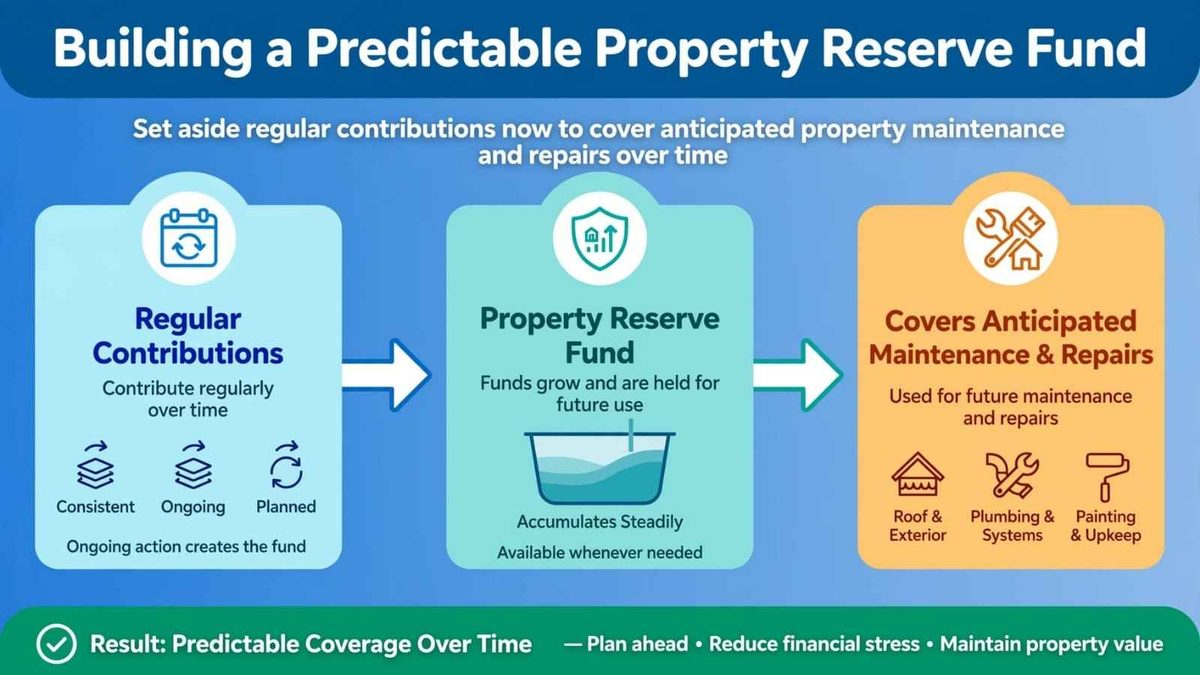
Then collect replacement estimates and allocate projected costs across the remaining years before the work is likely due. A regular commercial building maintenance schedule helps you track these systems and identify developing problems before they lead to larger expenses.
Review the reserve every quarter because material prices, facility use, and repair findings can change the forecast. Track preventive maintenance separately from capital replacement so routine service doesn’t consume money intended for a large project. If an inspection moves replacement forward by two years, update the monthly contribution immediately.
Conclusion:
A property reserve works best when real inspection data drives it, turning the next major invoice into a scheduled expense instead of a financial surprise. That’s why a preventative building maintenance schedule is so important to have as well. You want to avoid the expenses as much as possible for your small business.
Have you had to do building maintenance for your small business recently? I’d love to hear about it in the comments below.
Disclosure: This Small Biz Tipster blog post may contain affiliate links. I may earn a commission from qualifying purchases at no extra cost to you. Some sections were drafted with AI tools and carefully reviewed/edited by me.

I’m Lisa Sicard, founder of Inspire To Thrive.
Small Biz Tipster is my dedicated space for straightforward, no-nonsense tips that help small business owners grow smarter and faster. Voted in the Top 100 Small Business Blogs by Feedspot for 2025 and 2026, and with over 30 years of hands-on digital marketing experience, I share simple strategies here so you can save time on social media, attract more customers, and focus on what you love — running your business. Through Inspire To Thrive, I also provide social media management, training, and consultations.