
Talk to enough small business owners about a bad relocation and the same detail keeps coming up: the lack of reliable temporary business internet when they need it most. Not the lease negotiation. Not the movers running two hours late.
The internet. Specifically, the gap between the day you need it and the day the incumbent cable or fiber provider can actually show up and turn it on with reliable temporary WIFI.
A boutique accounting firm in Ohio moved into a new suite on a Friday, expecting a Monday install. The provider’s earliest slot was eleven days out. The owner ran payroll for six employees off a personal phone hotspot that week, apologizing to clients whose calls kept dropping.
Nothing about the move was reckless; the lease had been signed months in advance, the furniture arrived on schedule, and the signage was up. The internet timeline was simply never anyone’s to control.
Table of Contents
Why This Keeps Catching Owners Off Guard
Most small businesses only deal with a commercial internet install once every few years, so the process feels unfamiliar every single time. Owners assume it works like a home cable order: call, schedule, done in a week. Commercial installs run on a different clock: site surveys, building wiring checks, sometimes a landlord sign-off before a technician is even dispatched.

None of that shows up until you’re already mid-move, mid-lease, or three days from a trade show booth deadline with a signed contract and no plan B.
It’s not just relocations. A retailer opening a pop-up location for the holiday season. A marketing agency running a weekend activation at a local festival. A consulting firm sending two people to staff a booth at a regional trade show where the convention center charges a small fortune for shared wifi that still can’t handle a live product demo.
All of it is the same underlying problem: you need internet for a defined window of time, and the traditional path to getting it was never built to move that fast.
“I used to budget for the move and treat internet as a footnote,” said Renata Bosch, who owns a five-person design studio that relocated twice in three years. “The second move, I built the internet gap into the plan from day one instead of finding out about it the hard way. That one decision saved us a week of chaos.”
A Faster Way to Bridge the Gap with Temporary Business Internet
This is the exact problem WiFiT.net was built to solve, and it’s become one of the leading providers of temporary office and event Wi-Fi rental solutions for exactly this reason: small businesses that can’t afford to sit around waiting on an installer’s calendar.
Instead of a fixed-line contract, WiFiT deploys bonded cellular kits that pull signal from multiple carriers at once, so a five-person office or a trade show booth can be online within hours of a technician showing up, no permanent contract required.
For a small business specifically, the appeal isn’t just speed. It’s the flexibility to rent connectivity for exactly as long as it’s needed: two weeks during a relocation, four days for a trade show, a single weekend for a pop-up, and hand it back when the permanent line finally gets installed, or the event wraps.
A temporary office wifi provider Wifit customers can call on short notice tends to matter most in exactly the moments a small business has the least room for error:
- Launch week.
- A big client pitch.
- Three days a year the whole team is standing at a booth trying to close deals.
What the Setup Actually Involves When Business Internet Meets Your Needs
The process is simpler than most owners expect. A technician checks which carriers have the strongest signal at the address in question, brings a rack-mountable unit that bonds two or three of them together, and configures automatic failover so a dip on one network doesn’t take the whole connection down.
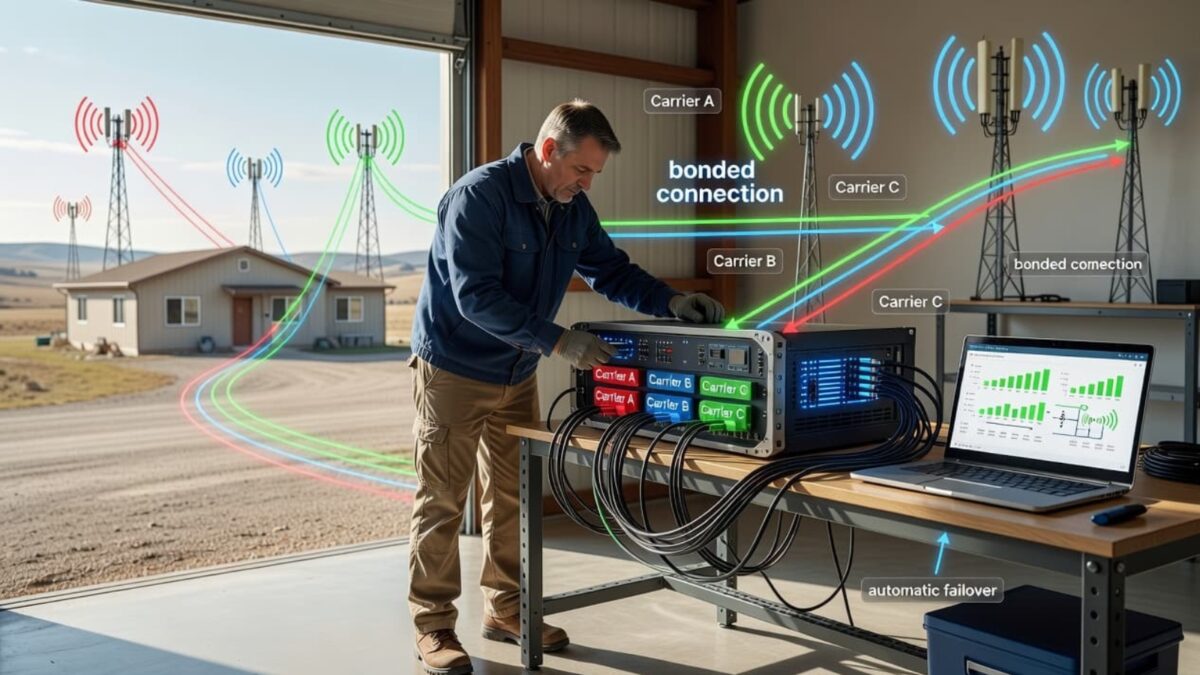
For a small office suite, that’s usually a two-hour job. For a trade show booth, it can be set up the morning of, tested, and handed off with guest and admin logins before doors open.
“Small businesses are usually the ones with the least slack to absorb a bad week,” said Matt Cicek, CEO of WiFiT. “A big company can shuffle a meeting or send someone home to work. A five-person firm can’t, every day without reliable internet is a day of lost billing, missed calls, and clients wondering if you’re still open. We built this specifically for the businesses that don’t have a backup plan sitting in a supply closet.”
A Short Checklist Before the Next Move or Event
A few questions worth answering before the moving truck or the booth shipment is even booked:
- What’s the provider’s earliest realistic install date, in writing, not verbally promised?
- Is there a backup plan if that date slips?
- Who owns making the call?
For an event or trade show, does the venue’s own wifi actually support a live demo, a card reader, and a dozen staff laptops at once, or is it built for casual browsing? And critically, is the backup connectivity something that can be booked this week, not something that requires its own multi-day lead time to arrange?
Answering those upfront turns a potential week of lost productivity into a non-event. Most owners only build this checklist after the first bad experience. The ones who build it beforehand tend to only need it once.
Building It Into the Plan, Not the Panic
The business owners who avoid the worst version of this story are the ones who treat temporary connectivity as a line item from the start, the same way they’d budget for movers or a booth deposit, rather than something they scramble for once the incumbent provider’s install date slips. It costs less in stress and downtime to plan for the gap than to discover it exists the week you needed it not to.
The permanent line will eventually get installed, the lease will settle in, the trade show will end. None of that has to be the reason a business goes dark for a week it can’t afford to lose.

I’m Lisa Sicard, founder of Inspire To Thrive.
Small Biz Tipster is my dedicated space for straightforward, no-nonsense tips that help small business owners grow smarter and faster. Voted in the Top 100 Small Business Blogs by Feedspot for 2025 and 2026, and with over 30 years of hands-on digital marketing experience, I share simple strategies here so you can save time on social media, attract more customers, and focus on what you love — running your business. Through Inspire To Thrive, I also provide social media management, training, and consultations.