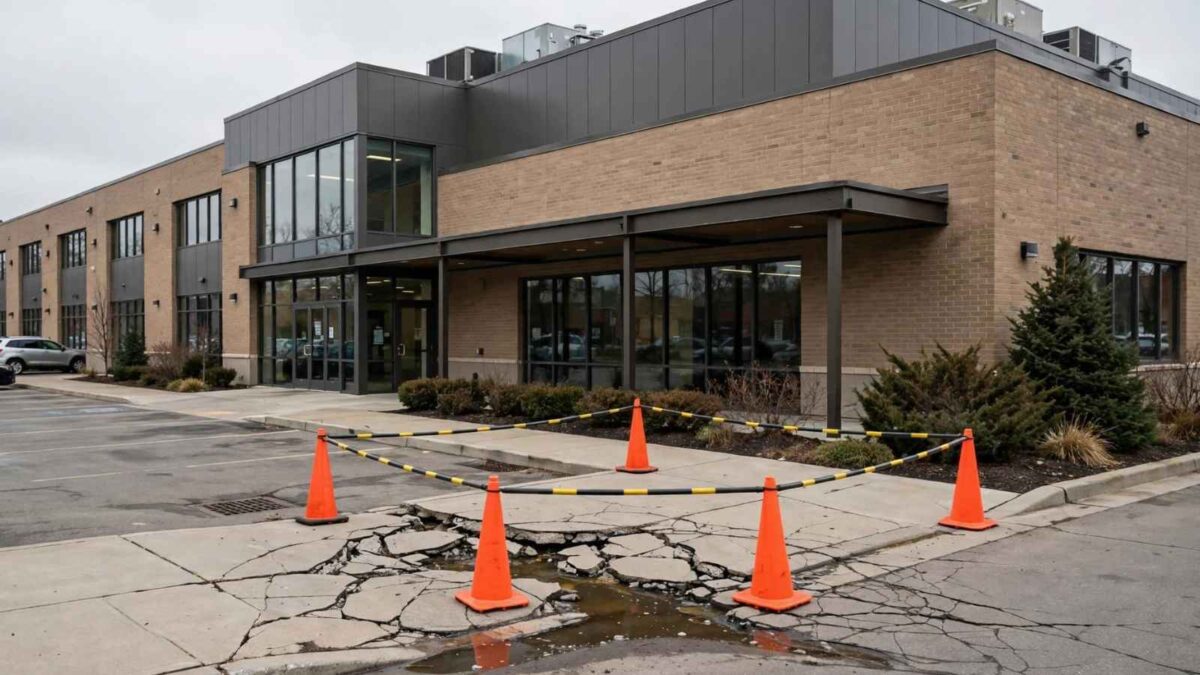
Small defects around a commercial property can expose customers, employees, and vendors to preventable injuries and increase the risk of commercial property liability. A raised sidewalk edge, loose entrance mat, or poorly lit step may seem minor during a busy workday. Yet, each one can lead to an injury claim, repair expenses, and operational disruption.
Property owners and managers can reduce that exposure through prompt maintenance and reliable documentation. The process starts with knowing where hazards tend to develop and deciding which problems require immediate attention.
Table of Contents
Recognizing Commercial Property Liability Hazards
Premises liability generally concerns an owner’s or occupier’s responsibility to keep a property reasonably safe for people allowed there and to mitigate the risk of commercial property liability. Exact legal duties vary by location and circumstances, so that local legal advice may be needed after an incident.
Still, most businesses benefit from addressing hazards they knew about or reasonably should have discovered. Start with areas that receive frequent foot traffic:
- Entrances.
- Parking areas.
- Loading zones.
- Ramps.
- Stairs.
- Routes between buildings deserve close attention.
Commercial Property Liabilities Waiting To Happen
Common problems include cracked pavement, curled floor mats, wet tile, missing handrails, poor drainage, and inadequate lighting. Guidance on commercial property claim causes also identifies conditions such as slippery floors and defective stairs as recurring sources of disputes.
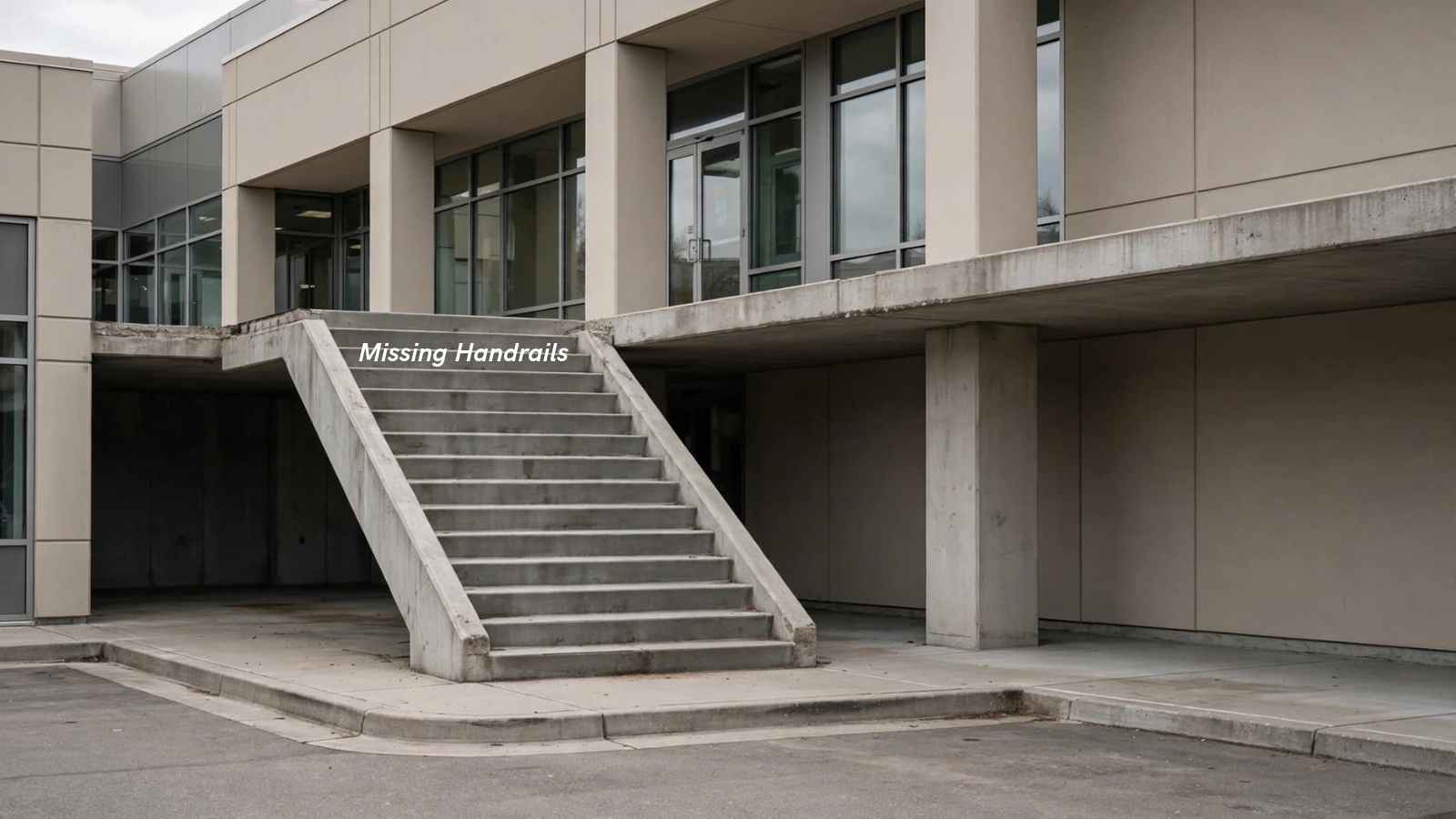
Look beyond obvious defects. A downspout that drains across a walkway may create a slippery patch after rain or freezing weather. Tree roots can gradually shift paving slabs, while soil settlement can cause a concrete panel to sink over several seasons. Even a display placed too close to an entrance may block a visitor’s view of an elevation change.
Response time matters once you find a hazard. Restrict access when there’s an immediate risk, place a visible warning nearby, and arrange an appropriate repair. Photograph the condition and record when it was found, who reported it, and what temporary controls were installed.
These records show that your business had a working inspection and maintenance process instead of relying on memory after a commercial property liability.
How Uneven Walkways Trigger Lawsuits
A walkway doesn’t need to be badly damaged to cause a fall. A modest vertical change between adjoining concrete panels can catch a shoe, mobility aid, or delivery cart wheel. The risk increases near entrances because visitors may be looking for a suite number, carrying packages, or adjusting to changing light levels.
Legal claims often focus on several practical questions. How long had the defect existed? Had anyone complained about it? Was the elevation change visible? Did the property owner inspect the area?
A commercial fall liability guide explains that responsibility can depend on control of the property, knowledge of the hazard, and the steps taken to correct it.
Things To Consider To Avoid Commercial Building Liability
Consider a concrete panel that settles near a retail entrance. If staff members walk over it every day and customers previously reported near falls, an owner may have difficulty arguing that the condition was impossible to discover.
The situation becomes more serious if inspection logs are missing or work orders were repeatedly postponed. Discussions of the dangers of uneven surfaces show why small elevation differences deserve attention before an injury occurs.
Temporary paint or a warning cone may help while a repair is being arranged, but these measures need active management. Markers can fade, cones can move, and visitors may approach from an unexpected direction.
Property managers in Edmonton and Central to Northern Alberta who find settled exterior slabs can request an assessment from providers of commercial concrete lifting services to determine whether lifting, leveling, or stabilization is appropriate.
Fixing Trip Hazards Without Total Replacement
Complete removal and replacement may be necessary when concrete has extensive cracking, severe surface deterioration, or structural damage. Settled slabs in otherwise usable condition may have other repair options. Concrete lifting raises the existing panel and fills or stabilizes the space below it, which can reduce demolition, debris, and interruptions around an active business.
Two techniques you may encounter are mudjacking and polyjacking. Both address voids or settlement beneath concrete, though they use different materials and equipment.
A qualified contractor should inspect the slab, surrounding drainage, soil conditions, and access points before recommending a method. Ask how the repair will affect doors, curbs, utility covers, and adjoining panels. Raising one slab without considering nearby elevations can simply move the problem.
Expectations For The Work To Avoid A Commercial Property Liability
Set clear performance expectations before approving work. Confirm which panels will be treated, how injection holes will be finished, and when the repaired area can reopen. You should also ask what level of lift is realistically achievable. Concrete that has broken into several unstable sections may not respond as predictably as an intact panel.
Drainage deserves attention during the same project. If water repeatedly washes soil away from beneath the walkway, leveling the slab may address the symptom without removing the cause. Check downspouts, grading, and nearby irrigation for recurring saturation. Coordinate any drainage work so runoff moves away from pedestrian routes and foundations.
After the repair, photograph the completed surface from several angles and update your maintenance records. Recheck it after heavy rain, freeze-thaw cycles, or nearby excavation.
A repair that appears level on completion day should remain part of future inspections, as ground conditions continue to change.
Conducting Regular Perimeter Audits
A perimeter audit works best when it follows the same route and uses the same checklist each time. Consistency helps you notice gradual changes that might otherwise go unnoticed during an informal walk around the building.
Monthly checks suit many properties, while sites with heavy traffic, active construction, or harsh seasonal conditions may need more frequent reviews. This approach also supports a broader preventive building maintenance plan that helps identify minor defects before they develop into costly repairs.
Inspect the property during daylight, then revisit key areas after dark. Lighting that appears adequate at noon may leave steps, curbs, and elevation changes difficult to see at closing time. Walk every route a visitor might use, including paths from accessible parking spaces, public sidewalks, and overflow lots.
Keep the checklist short enough that staff will actually use it:
- Look for vertical changes, cracks, and concrete panels that rock.
- Check drains, downspouts, and places where water collects.
- Test handrails and confirm that steps have visible edges.
- Inspect mats, thresholds, and door clearances.
- Verify that temporary barriers remain secure and easy to understand.
- Record the location, date, photo, and assigned response for each defect.
Risk reviews should also ask who controls each part of the site. A tenant may handle indoor housekeeping while a landlord maintains exterior walkways, but the lease and actual maintenance practices may assign duties differently. Questions used to limit premises liability can help managers review inspection routines, warnings, and repair responsibilities before a dispute develops.
Give every reported defect a status and deadline. An open item should identify the person responsible for arranging the repair and the temporary safeguard needed in the meantime. Close the item only after someone verifies the completed work.
Commercial Property Liability Audit
Your next perimeter audit should begin at the main entrance, where foot traffic and changing weather conditions often first expose maintenance gaps. Measure or photograph any uneven joint you find, then assign the repair before that small defect becomes part of an incident report.
General liability and commercial property insurance
General liability insurance helps cover claims if someone is injured on your property or if their property is damaged because of your operations, for example, a visitor who trips on an uneven sidewalk. A business property insurance policy, by contrast, is designed to protect the building and its contents from events such as fire, wind, or vandalism; it generally does not cover injury claims.
Most businesses need both, yet neither policy replaces the need for regular inspections and prompt repairs. Insurance can limit financial fallout from property damage coverage, but the strongest protection still comes from reducing the hazards that lead to claims in the first place.
Conclusion
Small defects around a commercial property rarely stay small. A settled sidewalk panel, a loose mat, poor drainage, or inadequate lighting can quickly turn into an injury claim, unexpected repair costs, and operational headaches. The businesses that limit this exposure are the ones that treat walkways, entrances, and exterior areas as ongoing maintenance responsibilities rather than waiting for a problem to become obvious.
Regular perimeter audits, concise, usable checklists, clear temporary controls, and solid documentation provide a practical way to demonstrate reasonable care. When a slab has settled but is still usable, options such as concrete lifting can often restore a safer surface with less disruption than full replacement, especially when you also address the drainage or soil issues that caused the settlement in the first place.
The goal is straightforward: find the hazards before a visitor, employee, or vendor does. Start your next walk-around at the main entrance, record what you see, assign clear next steps, and keep the process consistent. Of course, commercial property and casualty insurance is a must as well.
Those small habits are what turn hidden liability into manageable maintenance.
Disclosure: This Small Biz Tipster blog post may contain affiliate links. I may earn a commission from qualifying purchases at no extra cost to you. Some sections were drafted with AI tools and carefully reviewed/edited by me.

I’m Lisa Sicard, founder of Inspire To Thrive.
Small Biz Tipster is my dedicated space for straightforward, no-nonsense tips that help small business owners grow smarter and faster. Voted in the Top 100 Small Business Blogs by Feedspot for 2025 and 2026, and with over 30 years of hands-on digital marketing experience, I share simple strategies here so you can save time on social media, attract more customers, and focus on what you love — running your business. Through Inspire To Thrive, I also provide social media management, training, and consultations.


