A strong Instagram marketing for small business approach in 2026 is less about posting more and more about original Reels, useful carousels, and real conversations with the people who already care.
Instagram is no longer a photo app with a few extra buttons. With about 3 billion monthly users, it is one of the few places a small business can still get discovered without a giant ad budget.
Table of Contents
1. Make original Reels your discovery engine
Use this the week you tighten your Instagram marketing for small business.
Reels are how strangers find you. Feed photos are how people who already know you stay warm.
A simple weekly mix most small businesses can keep:
- 2–3 Reels for reach.
- 1–2 carousels for saves and teaching.
- 0–1 single image when a photo is the whole point.
- Stories most days for the people who already follow you.
What the algorithm rewards right now:
- A hook in the first 1–3 seconds (text on screen + movement).
- Watch time and replays, not just a 3-second “view”.
- People sending the Reel in DMs.
- Content you actually made; not a watermarked recap of someone else’s post.
In April 2026, Instagram tightened recommendations against aggregator accounts. If most of your last 30 days of posts are lightly edited reposts, you can lose Explore and Reels distribution even if your followers still see you.
Practical Reel formula for a local or service business:
- Problem in one line (“Your Google Business profile is costing you calls”).
- One proof or demo in 15–45 seconds.
- One clear next step (“Save this” or “Comment WORD and I’ll send the checklist”).
Skip “like this if you agree.” Asking for likes has been shown to hurt the number of likes. Asking for a comment, a save, or a DM usually does more for reach.
Use Meta’s Edits app if you do not want another video tool. Trial Reels lets you test a hook with non-followers before you push it to everyone.
For more on video as a sales tool, see video marketing.
2. Curate a feed people recognize in two seconds
A pretty grid still helps. It is not the growth lever it was in 2018.
Your feed should answer three questions fast:
- What do you sell or do?
- Who is it for?
- Why should someone trust you this week?
Pick a look you can repeat on a phone in 20 minutes: same crop, two or three colors, readable text. Then stop chasing “aesthetic” at the expense of useful posts.
Carousels earned a second life in 2026. You can use up to 20 slides. Add music and many carousels now show up in the Reels tab, which is how they reach people who do not follow you. If a carousel teaches something worth saving (price guide, before/after, “what’s included”), write a first-slide hook and put the payoff on slides 2–6.
Hashtags are for search and categorization now, not a growth hack. Instagram removed the ability to follow hashtags. Use a short, specific set (5–10) plus keywords in the caption and alt text, the same way you would write a blog title.
If captions take you forever, a generator can get a draft on the page — then you rewrite it in your voice. RightBlogger’s Instagram caption tool is one option.
3. Treat engagement like customer service, not a vanity metric
Likes are a weak signal compared with comments, replies, profile taps, and DMs.
Do this every time you post, even if you only have 10 minutes:
- Reply to every comment in the first hour if you can
- Turn good comments into a Story sticker or a follow-up Reel.
- Answer DMs the same day — Instagram boosts accounts people actually talk to.
- Use a Broadcast Channel for regulars (hours, drops, “we have two openings Friday”).
- Use Notes for a one-line nudge without a full post.
Stories still work because they sit in the tray of people who already chose you. Polls, questions, and “reply with X” keep you high in that tray. Behind-the-scenes beats another polished product shot.
If you sell products, customer photos and short “here’s how I use this” clips beat studio images. Reshare them (with credit) instead of only broadcasting.
Community is how a small account outruns a bigger one with a colder audience.
4. Read Insights like a shopkeeper, not a dashboard junkie
Open Instagram Insights weekly, not daily. You are looking for patterns, not a mood.
Check:
- Which Reels earned watch time and sends, not just views.
- Which carousels got saves.
- Who your audience actually is (age, location, peak hours).
- Profile visits and website taps after a post.
Trial Reels are the cheapest A/B test on the platform. If a hook dies with strangers, archive it before it becomes the face of your account.
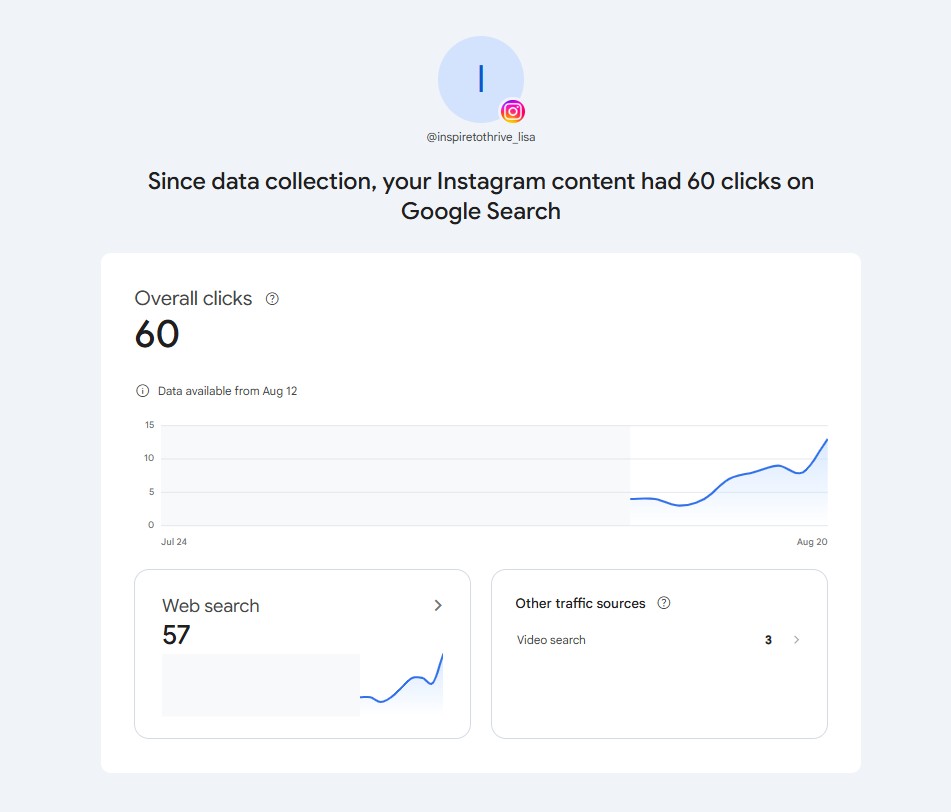
New in 2026 and easy to miss: Google Search Console now supports Instagram accounts. Public posts from professional accounts can appear on Google. Connect the property to see which posts and queries drive clicks. That is Instagram SEO; write captions the way a customer would search (“Portland wedding florist price guide,” not “vibes”).
Post timing still matters, but Insights beat any generic “best time to post” chart. If you want a starting point, I broke down timing here: optimal time for Instagram posts.
Native Insights show how your content performs. When you also want to study public competitor accounts (what they post, who they engage with, growth patterns), tools like Dolphin Radar can pull that public data into clearer reports without needing to log into their accounts.
5. Collaborate so you borrow trust, not just reach
A Collab post appears on both profiles. One piece of content, two audiences, one comment thread.
Best partners for a small business are usually:
- A complementary local business (not a direct competitor).
- A nano or micro creator whose followers look like your buyers.
- A customer who already makes content.
Keep the brief tight: one offer, one filming idea, one CTA. Let them talk like themselves. Stiff “brand-safe” scripts underperform original, slightly messy clips.
Cross-promote on Stories and in each other’s Broadcast Channels. A joint Live still receives a push notification that a regular post does not.
Paid partnerships should use the official label. Collab posts that are purely for growth are fine; just know some creator bonuses exclude branded and collab content.
6. Use Stories and Reels as Two Different Jobs
Reels = find new people. Stories = keep the people you have.
Stories ideas that do not take a production day:
- Today’s job site/kitchen/inbox (15 seconds, no music required).
- A poll: “Which of these two should I offer in October?”
- FAQ from a real DM.
- A product tag or a link sticker when you have a sale.
- Recycle a winning Reel into 3 Story frames with extra context.
Highlights should work like a website menu: Services, Reviews, Pricing, About, How it works.
Reels can now run much longer than the old 90-second cap (up to 20 minutes), but short still wins discovery. Aim 15–60 seconds unless you are teaching something people will finish. Instagram will warn you when length is likely to cap reach.
After a Story performs well, add an Instagram Highlight so new visitors can still find it later (Services, Reviews, Pricing, How it works).
If you want more Story tactics, I keep a longer walkthrough on Instagram Stories.
7. Post often enough to stay in the room — and stop when quality drops
A schedule most owners can keep without hiring a team:
- 3–5 feed posts per week (Reels + carousels).
- 2–5 Stories on the days you are working.
- Batch film on one day; publish through the week.
Too quiet and you fall out of habit (yours and the algorithm’s). Too noisy and you post filler, which trains people to scroll past you.
Consistency beats a 14-day content blast and then silence. Put posting on the same calendar as invoicing.
Spontaneous posts still have a place: a sold-out Saturday, a weather delay, a customer win. Those are the posts that feel like a real business, not a content machine.
8. Use ads when you have a winner, not when you feel desperate
Organic reach is competitive. A small, targeted boost on a post that already earned saves or DMs is usually smarter than boosting a dead post.
What works for small budgets:
- Boost a Reel or carousel that already performed.
- Retarget profile visitors and video viewers.
- Use Advantage+ only after you have a clear offer and creative that looks native.
- Send traffic to a page that matches the promise in the ad (or a DM flow if that is how you sell).
Shops and in-app checkout have been scaled back in favor of website checkout across many catalogs. Tag products where you can, but assume the click will take the user out of the app. Make the landing page fast and obvious.
Ads do not replace a weak offer. They amplify one.
9. Study accounts that sell, then stay current on purpose
Do not copy captions. Copy the system:
- How often they use Reels vs. carousels.
- Where they put the CTA.
- How fast they reply.
- Whether they teach, prove, or entertain first.
Watch 5 accounts in your niche and 2 outside it (a bakery can learn from a dentist’s Reels if the structure is clear). Note failures too — posts that look expensive and get nothing.
Then block 20 minutes a month for product changes. In the last year alone, owners had to absorb:
- “Your Algorithm” topic controls on Reels, Explore, and the main feed.
- Music on carousels reaching the Reels tab.
- Audio swap on published posts (engagement stays).
- Longer Reels and 20-slide carousels.
- Broadcast Channels and Notes.
- Instagram Plus extras (mostly consumer; Story Spotlight is the one that can jump a friend’s tray).
- Google visibility for public professional posts.
You do not need every feature. You need the two or three that match how you sell.
To go deeper than scrolling, some marketers use Instagram analytics tools such as Dolphin Radar to review public activity, engagement patterns, and growth on accounts they want to learn from.
Quick Instagram Marketing for Small Business checklist
Use this the week you update the account:
- Rewrite the bio to include who you help, a searchable phrase, and one link.
- Switch the grid so the last 9 posts make the business obvious.
- Film 3 Reels from questions customers already ask.
- Turn your best FAQ into a 7–10 slide carousel and add music.
- Reply to every comment and DM for 7 days straight.
- Invite 3 complementary businesses to each contribute one Collab post.
- Turn on Insights review every Friday. “Kill what nobody finishes” is a start: Instagram marketing for small businesses tip.
Summary: Instagram Strategies for Small Businesses
A strong Instagram marketing for small businesses in 2026 is original short videos, useful carousels, real conversations, and a niche clear enough that “Your Algorithm” knows who to send you to.
Follower count is a lagging indicator. Watch time, saves, and DMs are the leading ones.
You do not need to live on the app. You need a repeatable week: a few Reels, a teaching carousel, Stories that sound like you, and replies that make people feel like they found a real business.
👉 These tactics form a practical Instagram marketing for small business system you can actually keep up with.
Helpful extra: Dolphin Radar for public Instagram account research and competitor patterns.
How are you using Instagram for your business this year: Reels, carousels, or mostly Stories? Tell me in the comments. I read them.
Disclosure: This Small Biz Tipster blog post may contain affiliate links. I may earn a commission from qualifying purchases at no extra cost to you. Some sections were drafted with AI tools and carefully reviewed/edited by me.

I’m Lisa Sicard, founder of Inspire To Thrive.
Small Biz Tipster is my dedicated space for straightforward, no-nonsense tips that help small business owners grow smarter and faster. Voted in the Top 100 Small Business Blogs by Feedspot for 2025 and 2026, and with over 30 years of hands-on digital marketing experience, I share simple strategies here so you can save time on social media, attract more customers, and focus on what you love — running your business. Through Inspire To Thrive, I also provide social media management, training, and consultations.