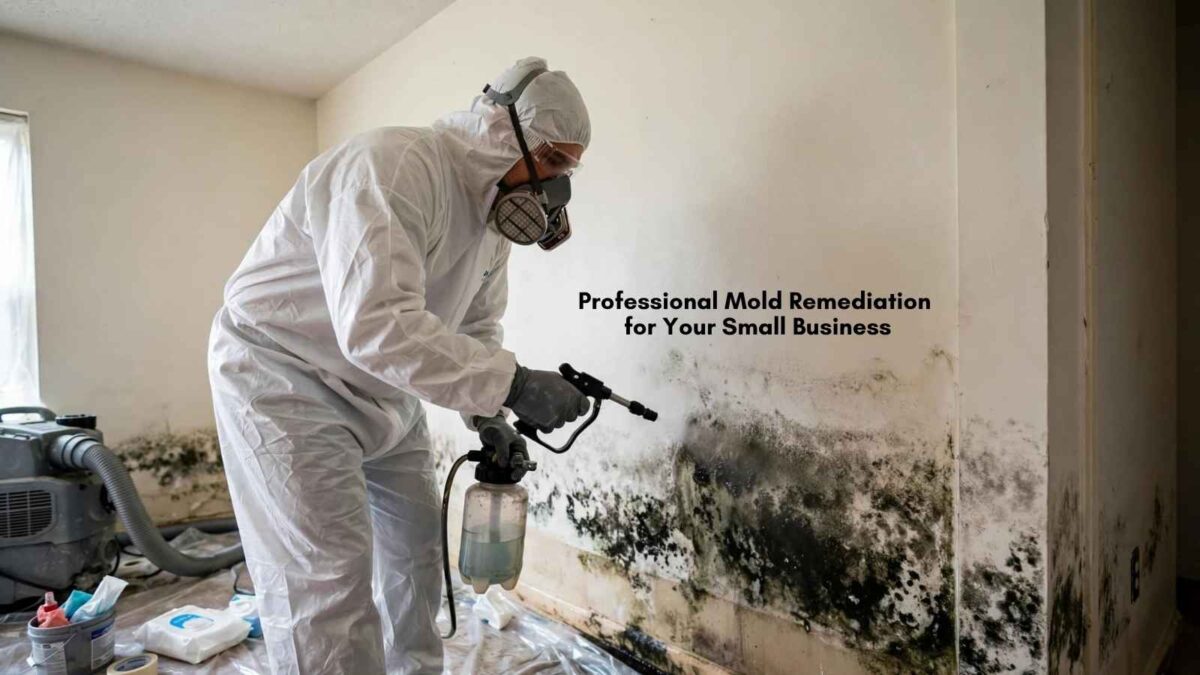
Moisture problems can quickly turn a commercial property issue into an operational and financial setback. According to the EPA’s commercial mold remediation guidance, the response should address both the mold growth and the underlying moisture source. A professional mold remediation plan helps protect occupants, building materials, and business continuity while documenting the work performed.
For owners and property managers, that structured response can reduce repeat problems and support better decisions about repairs.
Table of Contents
Why mold requires a fast response
Mold can begin growing on damp materials within a short period, especially when water enters drywall, ceiling tiles, or insulation. A slow plumbing leak behind a restroom wall may remain hidden until employees notice an odor or paint starts bubbling.
At that point, surface cleaning won’t address growth inside the wall cavity.
Fast action limits the area affected and may prevent a small repair from becoming a major closure. After a leak or water event, document the damage, stop the source if it’s safe to do so, and contact qualified help.
Keep people away from visibly affected areas until the property has been assessed.
When professional Mold remediation makes business sense
A maintenance team may be able to handle a minor patch on a nonporous surface after fixing the moisture source. Larger areas, recurring growth, and contamination within building systems require specialized assessment and containment. Professional Mold Remediation Services are also a practical option for Austin business owners dealing with musty odors, water damage, or mold growth in commercial properties.
Before approving work, ask the provider how the affected area will be isolated, which materials may need to be removed, and how the site will be cleaned. The scope should also explain how workers will prevent dust and spores from spreading into occupied rooms.
Protecting people and daily operations
A remediation project can affect employees, customers, tenants, and vendors, so communication matters. The health effects associated with damp buildings may vary among individuals, with some people experiencing nasal stuffiness, coughing, or eye irritation. Property managers should take reported symptoms seriously without attempting to diagnose their cause.
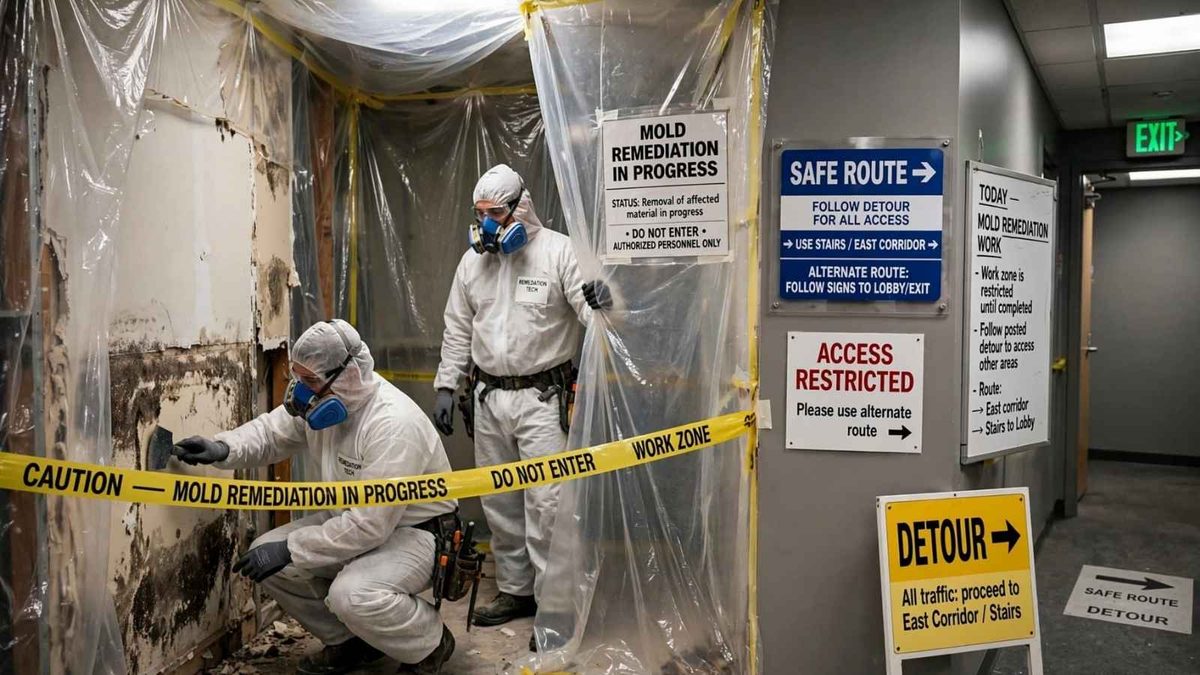
Create a simple communication plan that identifies closed areas, alternate entrances, and expected work hours. Schedule noisy or disruptive tasks outside peak business periods when possible. If an office suite must close, arrange temporary workspaces before remediation begins.
Clear signs and direct updates help prevent confusion without sharing speculative claims about health risks.
What a sound Mold remediation plan includes
Professional mold remediation work should follow a defined sequence. The provider first identifies affected materials and moisture sources, then establishes containment appropriate to the project’s size.
Air control equipment may be used to reduce particle movement while damaged porous materials are removed. Remaining surfaces are cleaned and dried before repairs begin.
Request written records that include photographs, moisture readings, and a description of removed materials. You should also understand who will repair the original leak and restore walls, flooring, or ceilings. If your company needs help coordinating contractors and other operational support, this guide to business services offers a useful starting point for organizing external assistance.
Prevention starts after cleanup
Professional mold remediation solves the current problem, but the building still needs routine moisture control. Add roof penetrations, plumbing connections, HVAC drain lines and exterior walls to your inspection schedule.
Staff should know where to report stains, odors and condensation so small issues reach the property manager quickly.
Check indoor spaces after heavy rain, equipment failures or extended closures. Keep storage boxes off the floor in areas vulnerable to leaks, and avoid placing shelving tightly against walls where airflow is limited.
When repairs are complete, retain remediation records with the property’s maintenance files. Those documents can help explain previous work to insurers, future tenants, and contractors.
A final walkthrough should confirm that damaged materials are gone, repaired areas are dry, and the source of moisture has been corrected. That last point determines whether the property moves forward or faces the same disruption again.

I’m Lisa Sicard, founder of Inspire To Thrive.
Small Biz Tipster is my dedicated space for straightforward, no-nonsense tips that help small business owners grow smarter and faster. Voted in the Top 100 Small Business Blogs by Feedspot for 2025 and 2026, and with over 30 years of hands-on digital marketing experience, I share simple strategies here so you can save time on social media, attract more customers, and focus on what you love — running your business. Through Inspire To Thrive, I also provide social media management, training, and consultations.