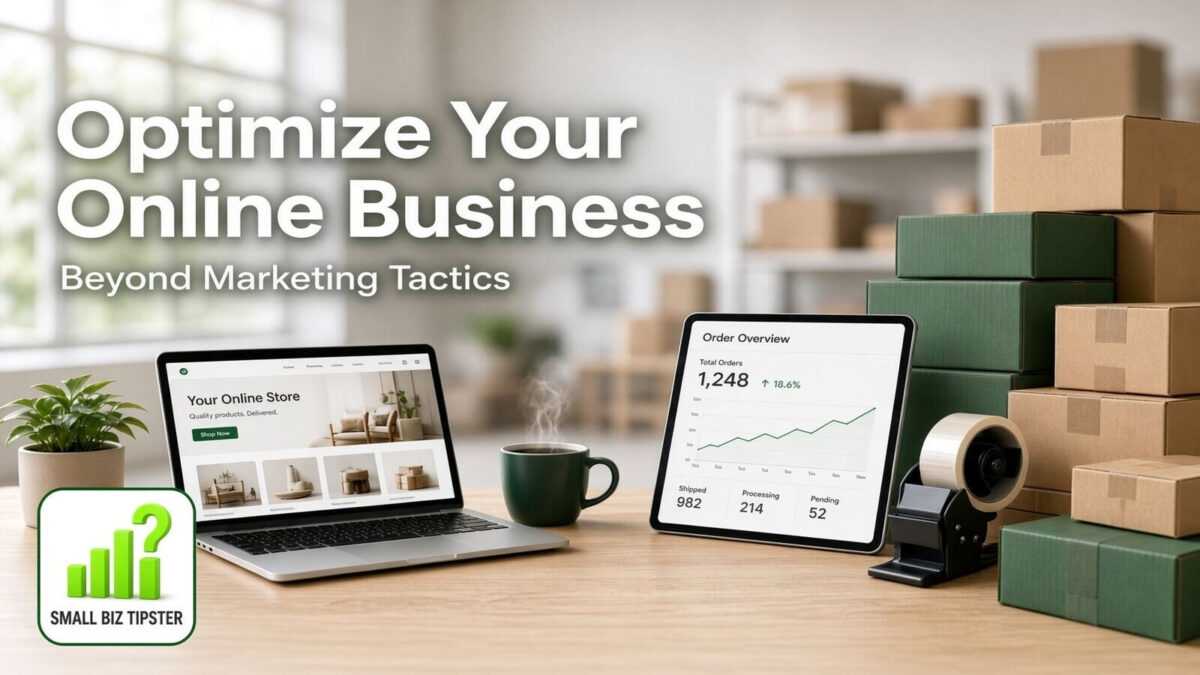
An effective marketing campaign can send your sales figures soaring, but that success often reveals hidden weaknesses in your business operations. Suddenly, the systems that worked for a handful of orders a day are breaking under the pressure of dozens or hundreds. This is the critical moment where you need to optimize your online business.
Scaling successfully isn’t just about attracting more customers; it’s about building the infrastructure to serve them well.
Focusing on your operational capacity ensures that your hard-won growth is sustainable and that new customers become loyal fans, not disappointed critics.
Table of Contents
Growth Means Operational Challenges
Rapid growth is exciting, but it places immense strain on your internal processes. The first signs of trouble often appear in your logistics.
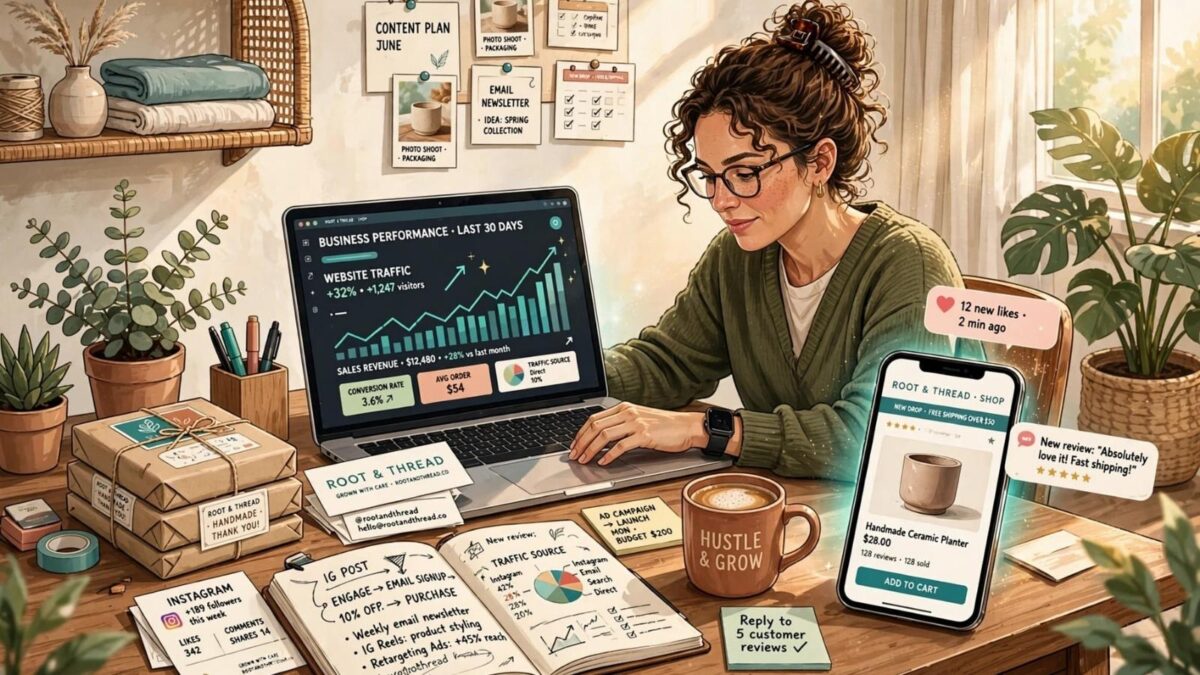
Your living room or garage, once a perfectly adequate warehouse, is now overflowing with inventory. You and your small team might be spending entire days printing labels and packing boxes, falling further behind with each new sale.
These are common challenges of the growth stage that can quickly overwhelm a business. Inventory management becomes a major headache, leading to stockouts of popular items or overstocking of slow-movers.
Customer service inquiries about order status are multiplying, and the risk of shipping errors is increasing. Without a plan to address these operational hurdles, your brand’s reputation can suffer just as it’s starting to take off.
A campaign that “works” can still hurt the business if:
- Orders ship late
- The wrong item goes in the box.
- Tracking never reaches the customer.
- You pause ads because you can’t fulfill.
Growth is only useful when delivery can match demand.
When Marketing Outruns Operations
A promotion is only as strong as the week after it runs. If ads, an email blast, or a marketplace deal send more orders than you can pack, you don’t get a win; you get late boxes and messy reviews.
Build a simple capacity number before you spend. How many orders can you ship on a normal day without staying up until midnight? How many extra can you handle for three days if something takes off? If the campaign target is higher than that number, fix fulfillment first or scale the campaign down.
That is the unglamorous half of growth. Traffic without a shipping plan turns paid clicks into refunds.
A Simple Pre-Campaign Check
Before you hit publish on a sale, confirm four things: inventory is actually on the shelf (or at the warehouse), your cutoff time is posted on the site, tracking will send without extra work, and someone is watching exceptions that day. If any of those are fuzzy, the campaign is early.
Why Efficient Order Handling Matters
Every order represents a promise to your customer. Getting that order from click to delivery efficiently is fundamental to keeping that promise.
Slow processing times, inaccurate shipments, or damaged goods can erode customer trust and lead to negative reviews that deter future buyers.
In a competitive online market, a poor delivery experience is often enough to send a customer to a competitor for good.
Many growing businesses choose to outsource this critical function to professional ecommerce fulfillment services. These partners are built for volume and efficiency. They have the space, staff, and systems to pick, pack, and ship orders far faster and more accurately than a small business can typically manage on its own, helping them overcome the challenges owners face.
👉 By entrusting order handling to experts, you free up your own time to focus on what you do best: developing products and marketing your brand.
What “Efficient” Actually Looks Like
- Orders leave on a predictable cutoff.
- Pick accuracy stays high.
- Tracking goes out without manual copy-and-paste.
- Returns don’t stall new orders.
Choosing the Right Fulfillment Partner to Optimize Your Online Business
Selecting a third-party logistics (3PL) provider is a significant step, so it’s important to choose a partner that can grow with you. Not all fulfillment centers are created equal. As you evaluate your options, consider factors that will help you scale your business for the long term.
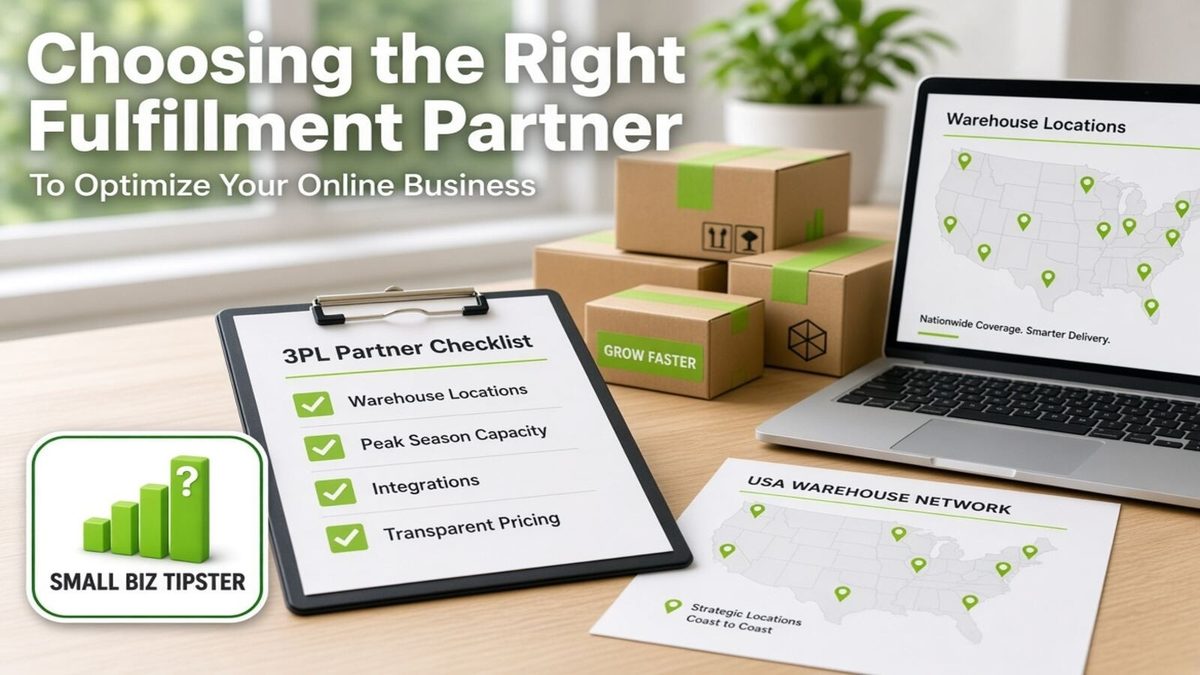
Look for a partner with a network of warehouses that can place your inventory closer to your customers, reducing shipping times and costs.
Ask about their ability to handle seasonal peaks, like the holiday shopping rush. A good partner will have scalable staffing and resources to manage surges in demand without compromising service quality.
Finally, ensure their pricing structure is transparent and aligns with your margins. A true partner will work with you to find cost-effective solutions that support your profitability as you expand.
Integrating Systems for Seamless Flow
Technology is the backbone of modern fulfillment. A manual process of emailing spreadsheets or entering orders by hand is slow, error-prone, and simply won’t work at scale. Your fulfillment partner should offer robust software that integrates directly with your e-commerce platform, such as Shopify, BigCommerce, or WooCommerce.
This integration automates the entire process. When a customer places an order on your site, the information is sent directly to the fulfillment center’s system without any manual intervention. The order is then picked, packed, and shipped.
Once it’s on its way, tracking information is automatically sent back to your store and shared with the customer. This creates a smooth, transparent experience for everyone involved and provides you with real-time visibility into inventory levels and order statuses.
Keep Visibility After You Hand Off Fulfillment
Outsourcing fulfillment does not mean handing over control and hoping for the best. You still own the customer relationship.
Set a simple monthly review with your partner. Look at order accuracy, on-time ship rate, cost per order, return reasons, and any customer complaints tied to delivery. Those numbers tell you whether the partnership is supporting growth or quietly eroding it.
👉 Keep your own restock process tight as well. A fulfillment center can only ship what it has in stock. Low-stock alerts, supplier lead times, and a calendar for peak seasons still belong on your side of the business.
What to Ask Before You Sign
Get answers in writing. Verbal promises fade after onboarding.
Service Questions
- What is your order accuracy rate?
- What is the daily shipping cutoff?
- How fast is inbound inventory available to sell?
- How do you handle peak season?
Cost Questions
- What is included in pick-and-pack?
- Are there receiving, storage, or long-term storage fees?
- What changes during Q4?
- Are there monthly minimums?
Exit and Data Questions
- Who owns the shipping and inventory data?
- How long does an offboarding take?
- Can you start with a pilot instead of moving every SKU at once?
Transparent pricing that fits your margins is part of optimizing your online business without trading one problem for another.
Selling Across the Online Marketplace
Many growing brands don’t sell only on their own site. Amazon, Walmart, Etsy, or social shops change the fulfillment picture.
The digital platform rewards fast, accurate shipping and punishes stock errors. Split inventory across channels without a shared count, and you will oversell. A fulfillment partner that syncs multiple channels from a single pool is often safer than running separate processes manually.
Marketplace Reality Check
- Each channel may have its own delivery expectations.
- Returns rules differ.
- Promotions can spike one channel overnight.
Plan inventory placement and integration before you turn on another channel, not after the first stockout.
How Operations Support Small Business SEO
This may not look like a search topic, but operations affect what people find, and what they say after they buy.
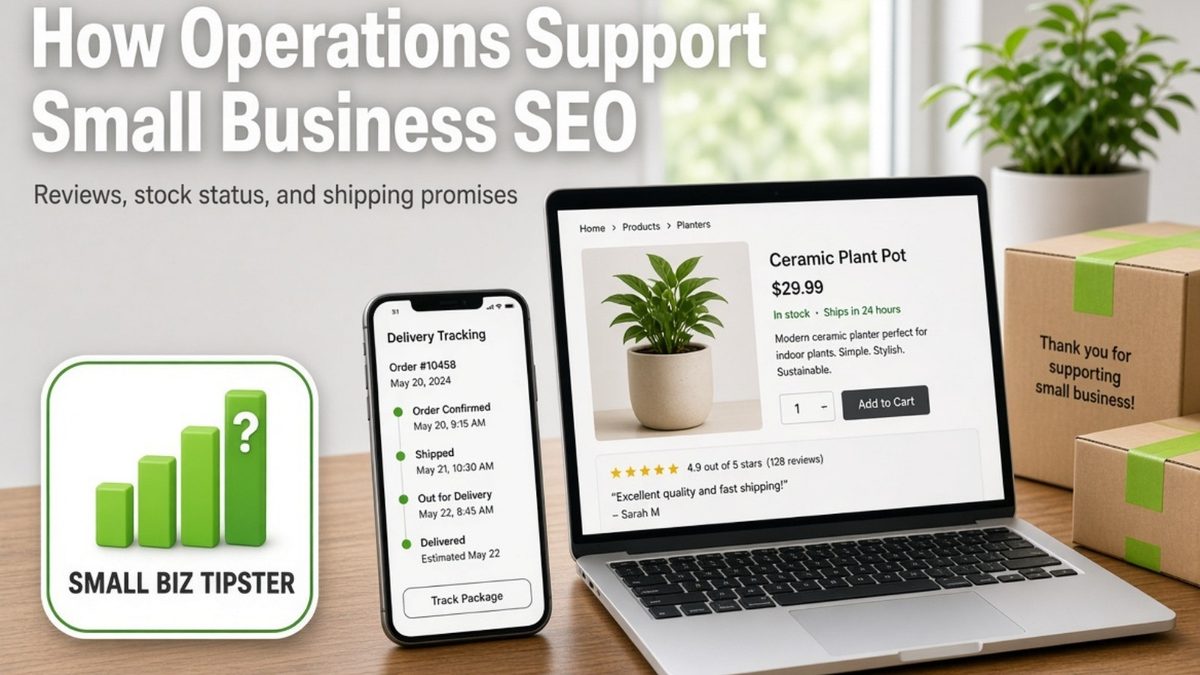
Reviews, delivery speed, and “in stock” accuracy influence trust. Thin or outdated product pages also hurt when inventory is wrong.
That is why small-business SEO works better when the backend can back up the promises on the page.
If your post says “ships in 24 hours” and orders leave in four days, the content and the operation are out of sync. Search engines are not the only audience. Customers are.
Be sure to regularly optimize your ecommerce site for better SEO.
Practical SEO-and-Ops Overlap
- Keep stock status honest on product pages.
- Don’t promote items you can’t fulfill this week.
- Use clear shipping copy that matches real cutoffs.
- Update FAQs when fulfillment partners or transit times change.
Wrapping Up
Investing in a strong operational foundation is just as important as your marketing budget. Anticipating growth challenges and implementing scalable solutions for order handling helps you ensure your business is ready to meet rising demand and build a lasting brand.
When you optimize your online business, treat operations as part of the customer experience, not as a back-office afterthought. Marketing gets the sale. Fulfillment keeps the promise.
FAQ: Optimize Your Online Business
What does it mean to optimize your online business beyond marketing?
It means strengthening the systems behind the sale: inventory, order processing, shipping, returns, and the software that connects them. Marketing can increase demand. Operations determine whether you can fulfill that demand without errors, delays, or founder burnout.
When should a small store start looking at fulfillment partners?
There is no single order count that fits every brand. Many owners start evaluating help when packing takes hours every day, errors increase, space runs out, or a promotion creates a backlog. If fulfillment is limiting new products, new channels, or your marketing calendar, it’s time to look.
Will a 3PL automatically help me optimize my online business?
Only if the partner fits your products, volume, and platforms. A poor fit, slow receiving, weak integrations, or surprise fees can add friction. Compare accuracy, warehouse locations, technology, returns handling, and total cost, not just the pick fee.
How do I keep shipping costs from eating my margins?
Inventory closer to customers usually lowers zone-based shipping costs. Volume rates through a fulfillment partner can also help. Still review dimensional weight, packaging size, and whether you’re offering shipping speeds your margins can support.
Do I lose control of the customer experience if I outsource fulfillment?
You shouldn’t. Tracking should flow back to your store automatically. You can still include branded inserts and set service standards. Monthly performance reviews keep you in charge of quality even when someone else packs the box.
What’s the biggest mistake brands make when they try to scale operations?
Waiting until peak season or a viral spike to change systems. Migrations, integrations, and inventory transfers take time. Plan the handoff when volume is steady so you’re not fixing fulfillment in the middle of your busiest month.
How does fulfillment software help optimize your online business?
It removes manual order entry, keeps inventory in sync, and sends tracking without extra work. That reduces mistakes and gives you a live view of what’s in stock and what’s already sold—information you need before you run the next campaign to boost your online business optimization.
Should I change site copy when I switch fulfillment partners?
Yes. Update shipping promises, FAQs, and policy pages so they match the new cutoff and return process. Old copy creates tickets even when the warehouse is doing its job.
Can I start with a pilot instead of moving every product?
Often yes. Send a limited set of SKUs or a share of orders first. Confirm accuracy, cutoffs, and costs before you move the rest. A pilot is slower on day one and much safer than a full switch during a busy month.
Disclosure: This Small Biz Tipster blog post may contain affiliate links. I may earn a commission from qualifying purchases at no extra cost to you. Some sections were drafted with AI tools and carefully reviewed/edited by me.

I’m Lisa Sicard, founder of Inspire To Thrive.
Small Biz Tipster is my dedicated space for straightforward, no-nonsense tips that help small business owners grow smarter and faster. Voted in the Top 100 Small Business Blogs by Feedspot for 2025 and 2026, and with over 30 years of hands-on digital marketing experience, I share simple strategies here so you can save time on social media, attract more customers, and focus on what you love — running your business. Through Inspire To Thrive, I also provide social media management, training, and consultations.